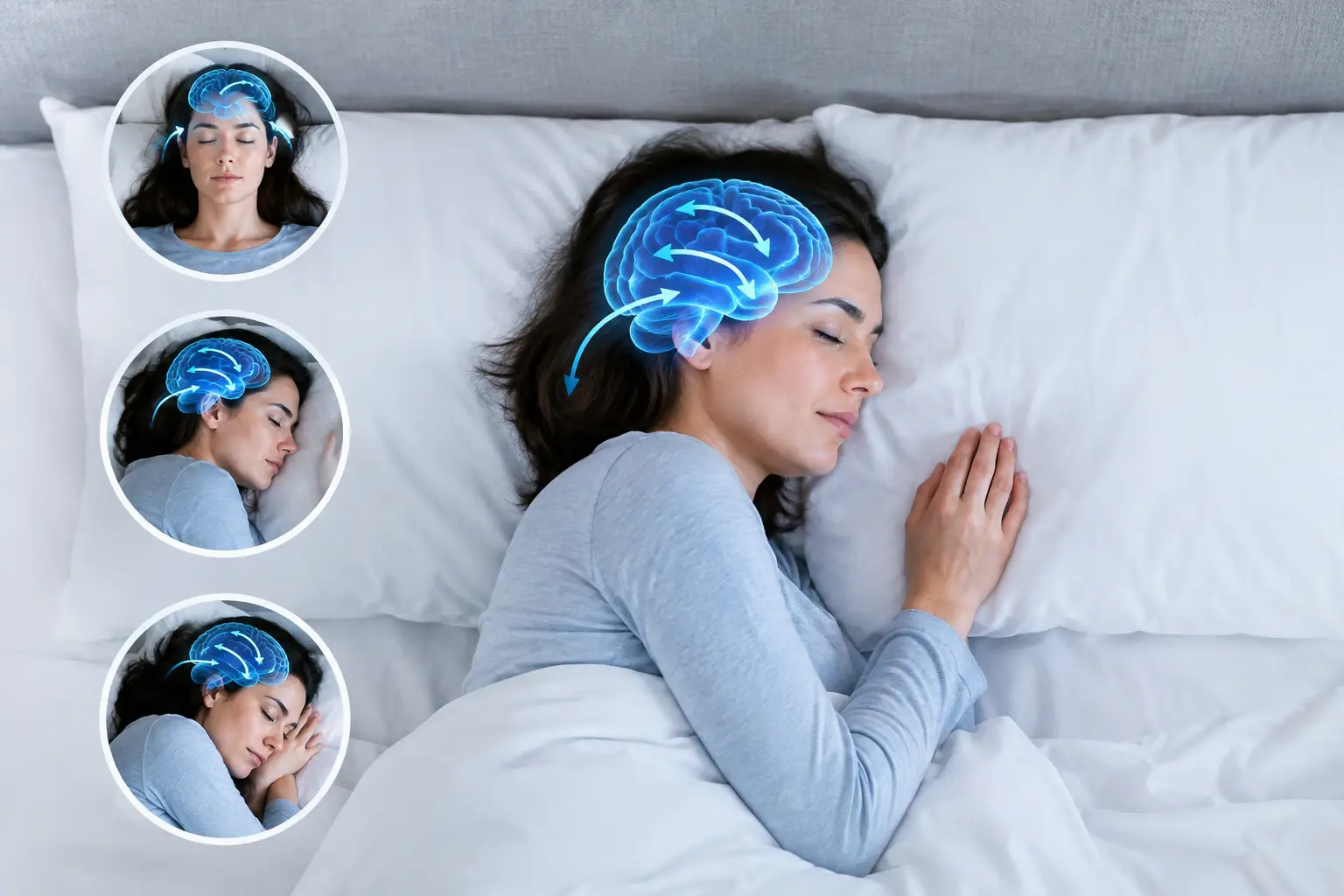
Best Sleep Positions for Brain Drainage Explained
The phrase “best sleep positions brain drainage” points to a question that deserves far more attention than it gets. Sleep is not merely downtime for the brain. During deep sleep, the glymphatic system increases its activity, moving cerebrospinal fluid through brain tissue and helping clear metabolic waste, including proteins that can accumulate over time. How you sleep may influence that process, but position is only one part of the equation.
The strongest practical takeaway is simple: side sleeping is the most promising position for supporting the brain’s overnight clearance process. That does not mean one night on your back causes damage or that posture can replace treatment for a sleep disorder. It means your sleeping position is a modifiable habit worth considering if protecting long-term brain health is a priority.
Why Brain Drainage Happens During Sleep
The glymphatic system is the brain’s specialized cleanup network. It uses fluid movement along blood vessels and through spaces between brain cells to help remove metabolic byproducts generated during waking life. This system is especially active during sleep, when the brain shifts into a more restorative state.
Deep, consolidated sleep matters because it creates the conditions for this clearance work to proceed efficiently. Fragmented sleep, untreated sleep apnea, frequent awakenings, heavy alcohol use, and chronic sleep restriction can all interfere with the recovery window your brain depends on.
This has major implications for adults concerned about brain fog, memory lapses, concussion history, migraines, aging, or a family history of neurodegenerative disease. The brain cannot maintain itself indefinitely without recovery. Nightly clearance is part of that maintenance.
Best Sleep Positions for Brain Drainage: Why Side Sleeping Leads
Research in animal models has found that the lateral position, commonly called side sleeping, supported more efficient glymphatic transport than sleeping on the back or stomach. Human research is still developing, so no responsible scientist can promise that side sleeping prevents Alzheimer’s disease or reverses neurological symptoms. Still, the findings provide a sensible direction for people who want to align their sleep habits with the biology of brain recovery.
Side sleeping may help because it affects fluid dynamics, breathing stability, and the way the head and neck are positioned over several hours. It can also be particularly helpful for people who snore or have mild positional breathing issues, although suspected sleep apnea always requires clinical evaluation.
For many people, the left side is comfortable and may also reduce acid reflux. The right side is completely reasonable if it is more comfortable, especially if left-side sleeping causes shoulder pain or aggravates an existing condition. The critical goal is not to force yourself into a rigid “perfect” side. It is to spend more of the night in a stable lateral position while preserving good-quality sleep.
Sleeping on Your Back
Back sleeping is not automatically bad for brain health. It can support neutral spinal alignment and may be the most comfortable choice for some people. The concern is that it can worsen snoring and obstructive sleep apnea in susceptible individuals, leading to repeated drops in oxygen and disrupted sleep architecture.
Those disruptions may matter more than the position itself. If you wake exhausted, gasp during sleep, snore loudly, have morning headaches, or feel unusually sleepy during the day, do not dismiss these signs as normal aging. A sleep evaluation can be one of the most meaningful actions you take for brain resilience.
Sleeping on Your Stomach
Stomach sleeping is generally the least practical option for most adults. It often requires turning the head sharply to one side, which can strain the neck and make breathing less comfortable. There is also less evidence supporting prone sleep as a favorable position for glymphatic flow.
If stomach sleeping is the only way you can fall asleep, do not create a new insomnia problem by trying to change overnight. Gradual adjustments work better. A body pillow, a thinner pillow under the head, or a pillow placed along the front of the body can make a transition toward side sleeping feel more natural.
Position Cannot Compensate for Poor Sleep
The best sleep position for brain drainage is the one that supports side sleeping without sacrificing the depth and continuity of your sleep. A person who lies perfectly on their side but wakes 12 times a night is not getting the same recovery opportunity as someone who sleeps soundly in a less-than-perfect position.
Focus on the conditions that protect deep sleep: a cool, dark room; a consistent sleep and wake time; morning daylight exposure; limited alcohol near bedtime; and a caffeine cutoff early enough for your body. If you use a phone in bed, the bigger issue is often not the screen alone but the mental stimulation that keeps the nervous system alert when the brain should be shifting into recovery mode.
Breathing deserves special attention. Sleep apnea can repeatedly fracture deep sleep, and many people with apnea do not realize they have it. Treating apnea is not only about reducing snoring. It may protect the oxygenation, circulation, and uninterrupted sleep cycles the glymphatic system relies on.
How to Make Side Sleeping More Sustainable
A supportive setup can determine whether side sleeping becomes a lasting habit or an uncomfortable experiment. Your pillow should keep your head level with your spine, not tilted down toward the mattress or pushed upward. Broad-shouldered sleepers usually need a thicker pillow than smaller-framed sleepers.
Place a pillow between your knees to reduce pressure on the hips and lower back. If your upper shoulder becomes sore, try hugging a body pillow or positioning one in front of your chest. This helps prevent the top arm from collapsing forward and pulling the shoulder into an uncomfortable angle.
People with shoulder arthritis, rotator cuff pain, hip pain, or recent surgery should ask a qualified clinician which adaptations are appropriate. Comfort matters. Pain-driven tossing and turning can undermine the very sleep continuity you are trying to improve.
A Brain-First Nighttime Strategy
Think of sleep posture as one lever in a larger brain-maintenance plan. Side sleeping is a practical starting point, but it works best alongside habits that protect deep sleep, address breathing issues, and support overall metabolic health.
This is also why glymphatic support deserves a more central place in conversations about cognitive aging. The brain has a built-in clearance system, yet many people spend decades focused on daytime energy while overlooking the biological work that happens after the lights go out. For those seeking a targeted natural approach, My Brain Restore™ is designed around support for this overlooked glymphatic pathway, alongside the foundational habits that no product can replace.
Start tonight with a realistic adjustment: set up your pillow for a comfortable side position, give yourself enough time for a full night of sleep, and pay attention to how rested you feel over the next several weeks. The most useful sleep position is not the one that looks ideal for a few minutes at bedtime. It is the one that helps your brain spend more of the night doing the recovery work it was built to do.