Brain Recovery After TBI Starts in Sleep
A traumatic brain injury can leave long aftershocks, even when the scans look better and the bruises are gone. People often expect brain recovery after TBI to move in a straight line. It rarely does. Some days thinking feels sharper, balance improves, and energy returns. Then sleep falls apart, brain fog surges, headaches come back, and progress feels fragile.
That pattern is not random. The injured brain is trying to repair tissue, calm inflammation, restore communication between cells, and clear the metabolic waste that builds up after trauma. If one part of that recovery process gets disrupted – especially deep sleep – healing can slow down in ways many people never hear about.
Why brain recovery after TBI is often slower than expected
A TBI is not just a bump to the head. It can trigger a cascade of inflammation, oxidative stress, disrupted blood flow, and changes in how brain cells use energy. Even a mild concussion can affect attention, memory, mood, and sleep for longer than expected. A more severe injury can have effects that last for months or years.
One of the biggest mistakes in TBI discussions is treating symptoms as isolated problems. Headaches are not just headaches. Poor sleep is not just poor sleep. Mental fatigue is not just getting older or being out of shape. These can reflect an injured brain that is still struggling to recover its normal housekeeping functions.
That matters because recovery is not only about rebuilding. It is also about clearing. After injury, the brain produces cellular debris, inflammatory byproducts, and damaged proteins that need to be removed efficiently. If that cleanup process lags, the environment inside the brain becomes less favorable for healing.
The hidden role of deep sleep in brain recovery after TBI
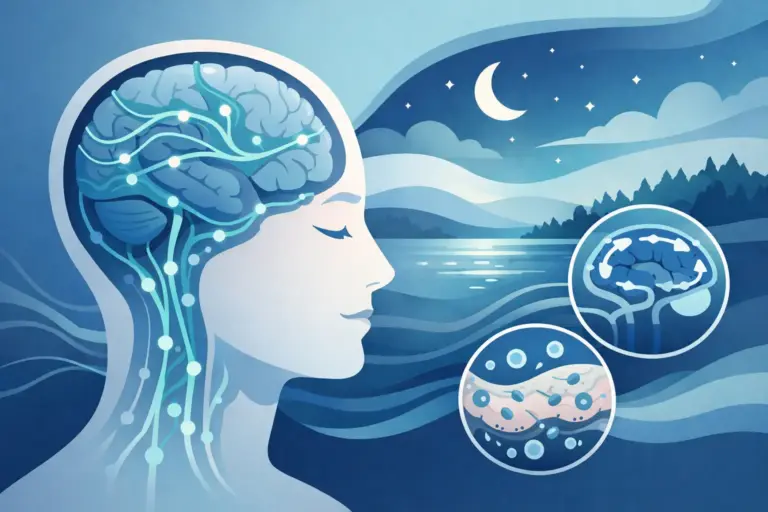
Deep sleep is when the brain shifts into one of its most important repair states. During this phase, the glymphatic system becomes especially active. This is the brain’s waste-clearance network, and it helps move cerebrospinal fluid through brain tissue to wash away toxins, proteins, and metabolic waste.
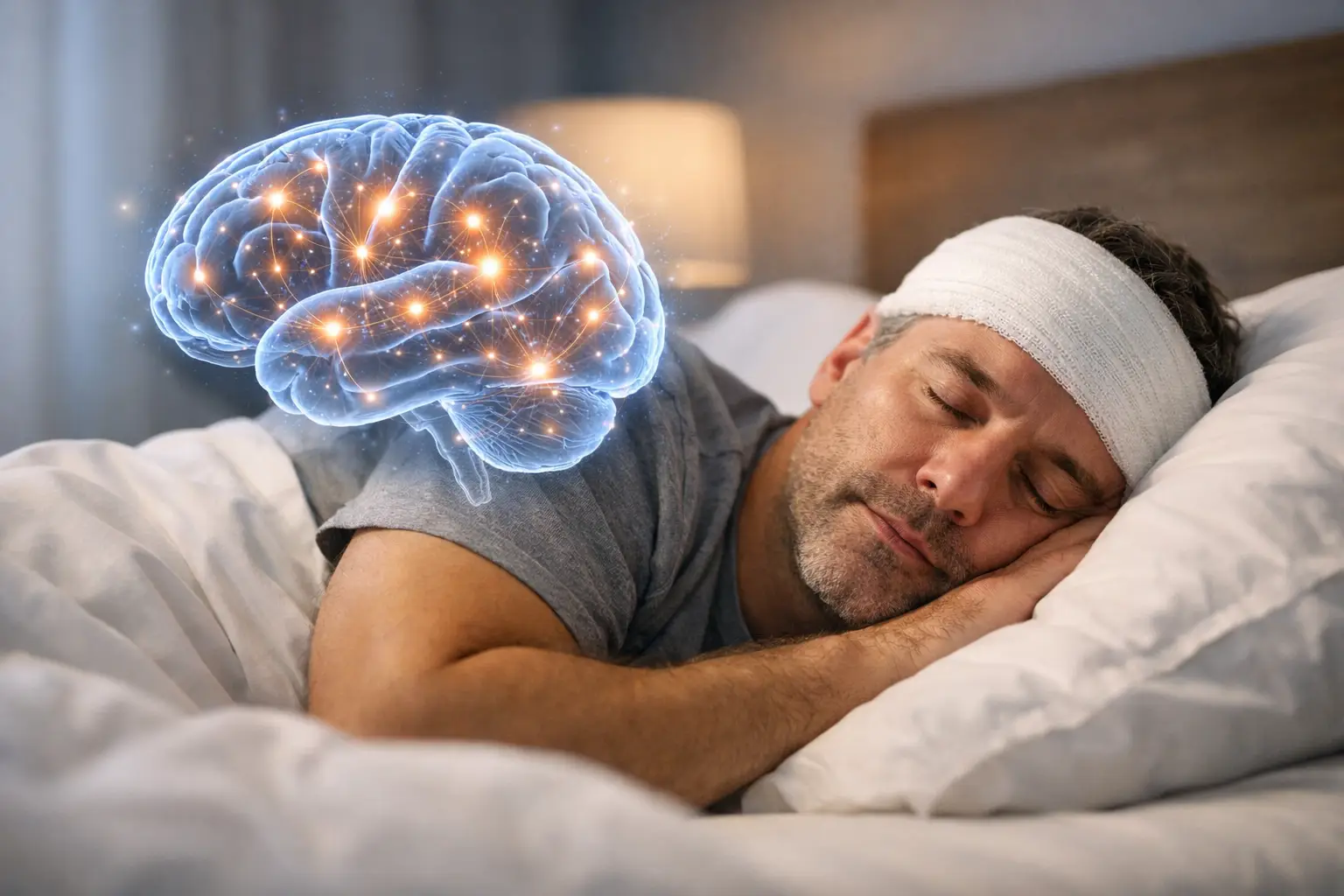
After a TBI, that function may matter more than ever. The brain is dealing with the aftermath of impact, inflammation, and cell stress. It needs quality sleep not only for rest, but for active biological maintenance. When sleep is fragmented, shortened, or too shallow, the brain may lose valuable time for recovery.
This is one reason post-TBI insomnia can be so damaging. Many patients are told to sleep more, but not enough attention is given to whether they are getting the kind of sleep that supports true neurological recovery. Hours in bed do not always equal restorative deep sleep. And if deep sleep is impaired, the glymphatic system may not work as effectively as it should.
That does not mean sleep alone fixes everything. TBI recovery depends on injury severity, age, prior concussions, medications, stress load, and underlying health. But it does mean sleep quality deserves much more respect than it usually gets.
What can interfere with healing after a brain injury
The most obvious obstacle is ongoing inflammation. After injury, inflammation is part of the body’s emergency response. In the short term, that can be useful. When it lingers too long, it may contribute to continued symptoms and reduced cognitive performance.
Sleep disruption is another major barrier. TBI can change circadian rhythm, trigger insomnia, worsen sleep apnea, and increase nighttime awakenings. That creates a vicious cycle. Poor sleep can worsen inflammation, headaches, mood instability, and cognitive fatigue. Those symptoms then make sleep even harder.
There is also the problem of overstimulation. Many people push too hard once the initial danger passes. They return to screens, work stress, hard exercise, multitasking, and late nights before the brain has regained its resilience. That can prolong symptoms rather than prove toughness.
Nutrition, alcohol use, blood sugar swings, and unmanaged stress can also shape recovery. The brain is metabolically expensive tissue. After injury, it becomes even less tolerant of instability.
What supports recovery in the real world
The strongest foundation is still surprisingly basic. Protect sleep, reduce avoidable inflammation, and lower the total load on the brain while it heals.
That starts with consistent sleep timing. Going to bed and waking up at the same time helps stabilize the systems that regulate restorative sleep. A dark, cool room matters. So does reducing bright light and screen exposure at night. Caffeine late in the day can become a bigger problem after TBI because the injured brain is already struggling to settle into deep sleep.
Alcohol is another common blind spot. People may use it to relax or fall asleep, but it tends to fragment sleep architecture and reduce the quality of overnight brain recovery. That trade-off is especially costly after a head injury.
Daytime activity should be approached with judgment, not bravado. Gentle movement often helps circulation, mood, and sleep, but overexertion can backfire. The right amount depends on symptoms, timing, and medical guidance. This is one of those areas where more is not always better.
Food choices matter too. An injured brain generally does better with stable blood sugar, adequate hydration, and a nutrient-dense pattern that does not add unnecessary inflammatory burden. No diet erases a TBI, but the body repairs better when it has the raw materials to do it.
Where the glymphatic system fits in
The glymphatic system is still underrecognized in mainstream conversations about brain injury, but it deserves attention. If the brain’s waste-removal pathway is most active during deep sleep, then any condition that damages sleep or alters fluid dynamics in the brain may affect cleanup and recovery.
That is a serious issue in TBI. Trauma can disrupt normal brain physiology in ways that may impair this overnight clearance process. When waste products and damaged proteins are not efficiently removed, the brain may remain under greater stress. Over time, that may have implications not only for symptoms now, but for long-term neurological resilience.
This is exactly why sleep-centered brain support is not a side topic. It is part of the main event. People concerned about cognitive decline, persistent brain fog, or the long tail of concussion history should be asking a sharper question: is the brain getting the deep sleep support it needs to clean, recover, and protect itself?
For some, that means tightening up habits. For others, it may also mean targeted support aimed at the biology of overnight brain maintenance. Glymphatic.com has built its work around this overlooked system for a reason. The brain cannot function well long term if it cannot clean well.
When patience is wise and when action is urgent
Recovery timelines vary. Some people improve steadily with time and careful support. Others plateau, relapse, or discover that months later they still are not thinking clearly, sleeping deeply, or feeling like themselves.
That is when it becomes dangerous to normalize persistent symptoms. Lingering headaches, dizziness, memory issues, irritability, poor sleep, and mental fatigue should not be brushed off as something you simply live with if better support and evaluation are available. TBI is not always visible, but the biology is real.
At the same time, urgency does not mean panic. It means taking the brain seriously. It means recognizing that recovery is influenced by systems that many conventional conversations barely mention, including sleep architecture and glymphatic function.
A smarter way to think about healing
The old model of TBI recovery is too narrow. It focuses on symptom tracking, rest in the early phase, and waiting. Some of that is necessary. It is not enough for many people.
A better model asks whether the brain has what it needs to repair and clear itself night after night. Are inflammation and overexertion being reduced? Is deep sleep being protected? Is the brain’s cleanup system being supported instead of ignored?
Those questions matter because healing is not passive. The brain is working through every night of quality sleep to restore order after injury. When that process is protected, recovery has a stronger biological foundation. When it is neglected, people may spend far too long wondering why they still do not feel clear.
If you are thinking about brain recovery after TBI, think beyond rest. Think about whether the brain is truly getting the conditions it needs to recover, clean house, and build resilience for what comes next.