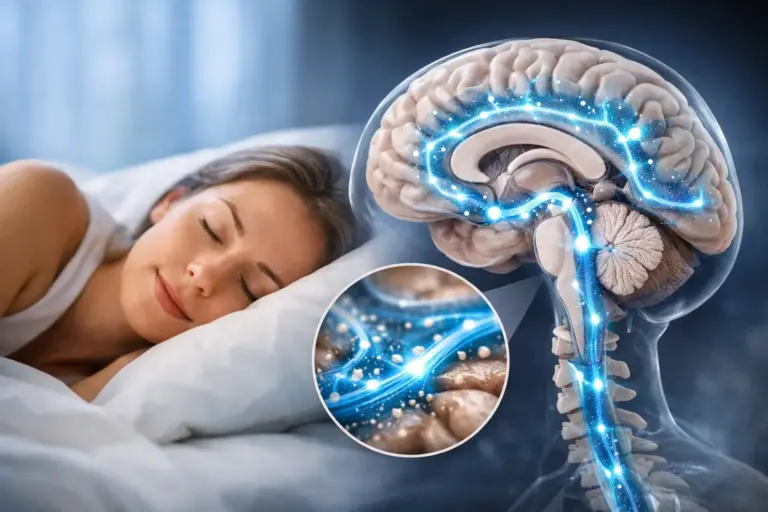
Deep Sleep Versus Light Sleep: What Your Brain Needs
A night can feel long, yet leave you waking with a heavy head, poor focus, and the sense that your brain never truly powered down. The difference often comes down to deep sleep versus light sleep – not which one is “better,” but whether your brain is moving through both stages in the right pattern.
Light sleep helps you transition, process, and remain responsive to the world around you. Deep sleep is where physical restoration intensifies and the brain’s overnight maintenance work becomes especially active. For anyone concerned about brain fog, aging, headaches, memory changes, concussion history, or long-term cognitive resilience, that distinction deserves more than a passing glance.
Deep sleep versus light sleep: the essential difference
Sleep is not a single state. It is a repeating cycle of non-REM and REM sleep that changes across the night. Light sleep generally refers to the earlier non-REM stages, while deep sleep refers to slow-wave sleep, the deepest non-REM stage. REM sleep is its own category, marked by vivid dreaming and high brain activity.
In light sleep, your heart rate slows, your muscles relax, and you become less aware of your surroundings. You can still wake fairly easily. This is not wasted sleep. Light sleep makes up a substantial share of a healthy night and helps the brain transition between wakefulness, deeper sleep, and REM.
Deep sleep is harder to interrupt. Brain waves slow dramatically, blood pressure drops, and the body shifts toward intensive recovery. This stage is strongly associated with feeling physically restored the next day. It is also the sleep stage most closely tied to the glymphatic system – the brain’s waste-clearance network.
The goal is not to eliminate light sleep or force deep sleep all night. Human sleep does not work that way. The goal is to protect the natural architecture of sleep so your brain has enough opportunity to reach its deepest restorative phases.
Why deep sleep matters to the brain’s cleanup system
Your brain is metabolically demanding. Every day, its cells produce proteins, cellular debris, and metabolic byproducts that need to be moved out efficiently. Unlike most of the body, the brain has a specialized clearance pathway known as the glymphatic system.
Research has shown that this system becomes especially active during sleep, with deep, slow-wave sleep appearing particularly relevant to the movement of fluid through brain tissue. During these deeper stages, changes in brain activity and the spaces around brain cells may help cerebrospinal fluid exchange with interstitial fluid, carrying away waste products in the process.
That does not mean one poor night permanently damages the brain, and it does not mean deep sleep alone prevents neurological disease. Brain health is shaped by genetics, cardiovascular health, exercise, metabolic function, injury history, stress, medications, and many other factors. Still, chronically disrupted sleep is not a minor inconvenience. It can interfere with the conditions the brain needs for overnight recovery and maintenance.
This is why fragmented sleep deserves attention, particularly for people who wake repeatedly, snore heavily, struggle with untreated sleep apnea, use alcohol as a sleep aid, or rely on a schedule that constantly shifts. You may spend eight hours in bed and still miss the continuity that deeper sleep requires.
What light sleep does that deep sleep cannot
It is easy to hear about slow-wave sleep and start treating light sleep as second-class sleep. That would be a mistake.
Light sleep acts as the bridge into deeper non-REM sleep and REM sleep. It contributes to a stable sleep cycle, supports sensory disengagement, and provides much of the time your body spends asleep. A wearable may report a large amount of light sleep simply because light sleep is naturally common.
Light sleep also tends to occur more often later in the night, along with longer periods of REM sleep. Cutting your sleep short to chase a perfect deep-sleep score can backfire by reducing REM-rich late-night sleep, which plays a role in emotional processing, learning, and memory integration.
The better question is not, “How do I get less light sleep?” Ask, “Am I getting enough total, uninterrupted sleep for my brain to complete its full cycle?” For most adults, regularity and continuity matter more than trying to micromanage a single stage.
The timing of each stage changes overnight
Deep sleep is concentrated more heavily in the first half of the night. REM sleep becomes more prominent toward morning. Light sleep appears throughout the night, connecting these cycles.
That pattern has practical consequences. Going to bed at 1:00 a.m. and waking at 6:00 a.m. may not affect every person identically, but consistently shortening the night compresses the time available for all stages. Frequent awakenings can be equally disruptive because they break the sustained periods of sleep that allow deeper stages to develop.
Signs your sleep may be too fragmented
No symptom can diagnose a sleep-stage problem on its own. Consumer sleep trackers estimate stages from movement, heart rate, and other indirect signals. They can reveal trends, but they are not the same as a clinical sleep study.
Still, certain patterns are worth taking seriously. Waking unrefreshed despite adequate time in bed, persistent daytime sleepiness, loud snoring, gasping or choking during sleep, morning headaches, memory lapses, irritability, and worsening brain fog can all signal that sleep quality needs a closer look.
For people with a history of concussion or traumatic brain injury, long COVID symptoms, migraines, Parkinson’s-related concerns, or worries about cognitive decline, poor sleep should not be brushed aside as an inevitable part of aging. Sleep disruption may be one contributor among many, but it is a meaningful one because it affects the brain’s nightly recovery environment.
If snoring, breathing pauses, severe insomnia, unusual movements during sleep, or overwhelming daytime fatigue are present, speak with a qualified clinician. Obstructive sleep apnea in particular can repeatedly interrupt sleep and lower oxygen levels, creating risks that require proper evaluation and treatment.
How to support more restorative sleep
The most effective approach is often less glamorous than the latest sleep hack: create conditions that allow your biology to do its work. A consistent wake time anchors your circadian rhythm. Morning outdoor light reinforces that signal. A dark, cool bedroom reduces common barriers to sleep continuity.
Protect the hours before bed as well. Alcohol may make you sleepy at first, but it can fragment sleep later in the night. Large late meals, nicotine, and caffeine that lingers into the afternoon can have a similar effect in susceptible people. If you wake to use the bathroom often, consider whether late-evening fluids, alcohol, medications, blood sugar issues, or an underlying medical concern may be contributing.
Exercise is another powerful lever. Regular daytime movement supports sleep pressure, cardiovascular health, and metabolic health – all relevant to long-term brain resilience. The trade-off is timing: intense late-night exercise can feel activating for some people, while others tolerate it well. Your own sleep pattern is the test.
Stress management matters because a brain on high alert does not easily settle into deep sleep. A short wind-down routine, slow breathing, gentle stretching, journaling, or a quiet screen-free transition can be more valuable than endlessly checking sleep data. If a tracker makes you anxious about achieving a score, it may be undermining the very rest you are trying to improve.
Deep sleep is not a luxury for brain health
People often treat sleep as negotiable until focus slips, names become harder to recall, or fatigue becomes part of daily life. But the brain does not pause its maintenance needs because work is busy, caregiving is demanding, or stress is high.
Deep sleep is one window in which the glymphatic system can more effectively support the brain’s natural clearance processes. Light sleep remains necessary, REM remains essential, and no supplement replaces treatment for a sleep disorder. Yet supporting healthy sleep habits and the biological conditions behind overnight brain maintenance is a practical form of prevention.
For those seeking targeted, natural glymphatic-system support alongside a serious sleep foundation, My Brain Restore™ was developed around that overlooked aspect of brain wellness. Start with the basics tonight: protect your sleep window, reduce interruptions where you can, and give your brain the time and consistency it needs to do its quietest, most consequential work.