Glymphatic Versus Lymphatics: What Clears the Brain?
The distinction between glymphatic versus lymphatics is not a technical footnote. It changes how we think about brain fog, poor sleep, head injuries, aging, and the long-term buildup of proteins and metabolic debris in the brain. Your body has long been known to rely on the lymphatic system for fluid balance and immune defense. But the brain uses a related, specialized clearance network – the glymphatic system – that works most powerfully while you sleep.
For anyone serious about protecting cognitive function, this is a system worth understanding. The brain is not designed to run indefinitely without maintenance. It produces waste with every waking hour, and deep sleep is when much of that cleanup work is believed to accelerate.
Glymphatic Versus Lymphatics: The Core Difference
The lymphatic system is a body-wide network of vessels, lymph nodes, and immune cells. It collects excess fluid from tissues, transports immune cells, filters foreign material, and eventually returns fluid to the bloodstream. When you think of swollen lymph nodes during an infection or lymphatic drainage after an injury, this is the system involved.
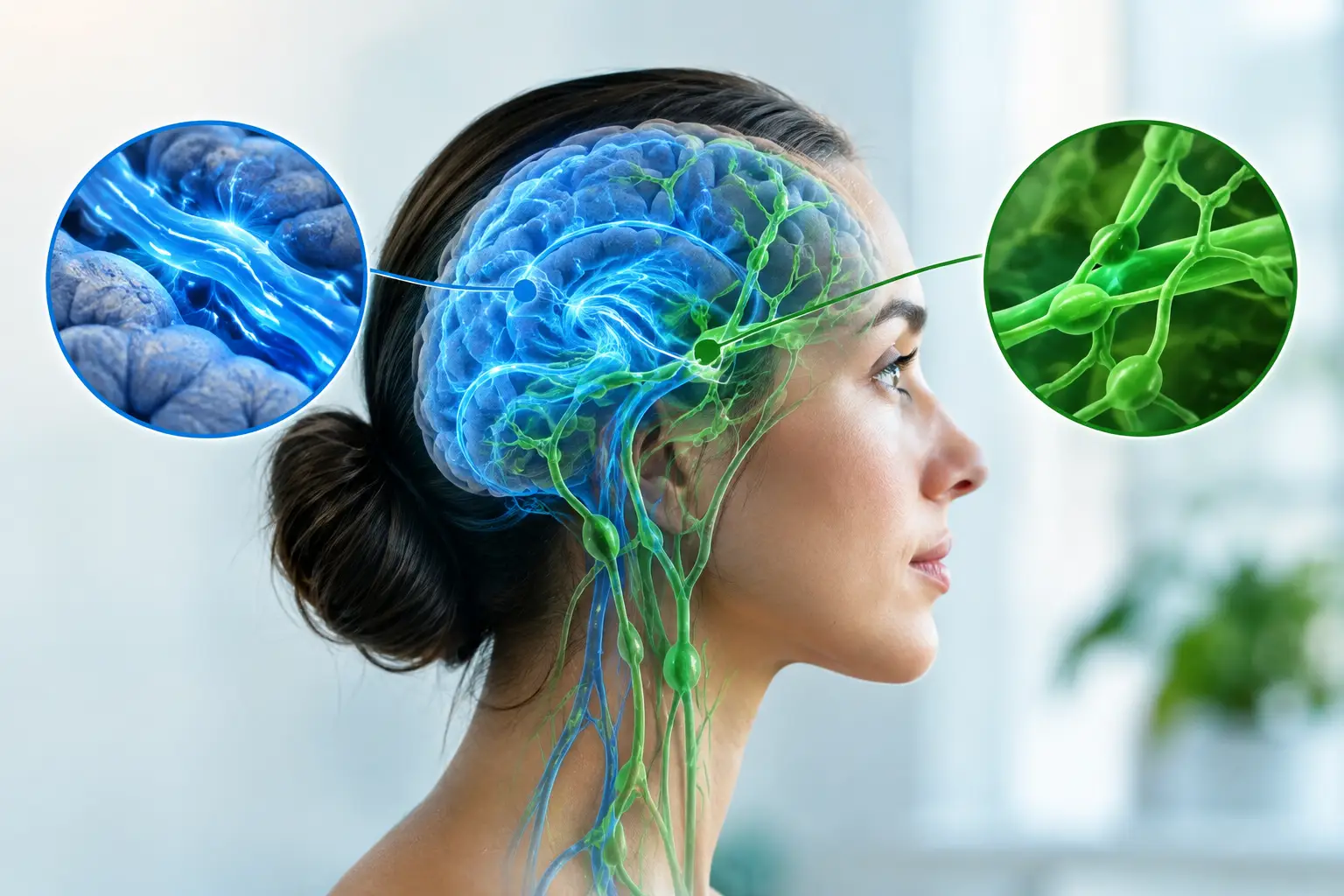
The glymphatic system serves a different, highly specialized role inside the central nervous system. It helps move cerebrospinal fluid through spaces around blood vessels and exchanges that fluid with the brain’s interstitial fluid – the fluid surrounding brain cells. That movement helps carry away metabolic waste generated by active neurons.
The name “glymphatic” reflects its connection to glial cells, particularly astrocytes. These support cells help regulate water movement through channels called aquaporin-4. In simplified terms, the glymphatic system uses fluid flow along brain blood vessels and glial-cell pathways to help rinse the brain’s internal environment.
It is not simply the brain’s version of a lymph node network. Traditional lymphatic vessels are present in the membranes surrounding the brain, called the meninges, and they help drain fluid and immune material toward lymph nodes in the neck. The glymphatic pathway operates within the brain tissue itself. These systems are connected, but they are not interchangeable.
Why the Brain Needs Its Own Cleanup Pathway
The brain is metabolically expensive. Although it represents a small fraction of body weight, it consumes a disproportionate share of the body’s energy. That activity creates byproducts that must be cleared efficiently.
Among the molecules researchers are studying are beta-amyloid and tau, proteins associated with Alzheimer’s disease when they accumulate abnormally. The glymphatic system has also been linked in research to the clearance of other metabolic waste products. This does not mean poor glymphatic function alone causes Alzheimer’s, Parkinson’s disease, migraines, traumatic brain injury symptoms, or long COVID brain fog. These conditions are complex and have multiple drivers.
But it does mean brain clearance deserves far more public attention than it receives. If the brain’s fluid movement, sleep architecture, vascular health, or drainage pathways are compromised, the conditions for efficient nighttime maintenance may be compromised too.
That is a meaningful shift in perspective. Instead of viewing sleep as passive downtime, glymphatic research gives us another reason to see deep sleep as active biological repair.
Deep Sleep Is When Clearance Appears Most Active
One of the most compelling findings in glymphatic research is that this system appears to be especially active during sleep, particularly slow-wave sleep. During deep sleep, changes in brain activity and fluid dynamics may allow cerebrospinal fluid to move more effectively through the brain.
This helps explain why a bad night of sleep can feel like more than ordinary tiredness. After fragmented sleep, many people describe a heavy, foggy, mentally slow sensation. One night of poor sleep does not permanently damage your brain, and no wellness product can replace consistent restorative sleep. Still, chronic sleep disruption is a legitimate brain-health concern.
Sleep apnea, insomnia, frequent nighttime waking, alcohol use close to bedtime, and an irregular sleep schedule can all interfere with sleep quality. Aging may also change sleep patterns and the efficiency of fluid movement in the brain. For adults who wake unrefreshed, struggle with memory lapses, or notice worsening mental stamina, sleep quality should not be dismissed as a lifestyle inconvenience.
Sleep position may matter as well, though the evidence is still developing. Some animal research has suggested that side sleeping could support more favorable glymphatic flow than other positions. That is not a reason to force an uncomfortable position or treat sleep posture as a cure. It is an example of how ordinary habits may interact with the brain’s overnight maintenance systems.
Where Meningeal Lymphatics Fit In
The discovery and renewed study of meningeal lymphatic vessels challenged the old belief that the brain lacked meaningful lymphatic drainage. These vessels are located in the protective tissues around the brain, rather than spread throughout brain tissue like lymphatic vessels in the rest of the body.
They help transport cerebrospinal fluid, immune cells, and certain waste-related materials away from the brain’s surrounding spaces toward lymph nodes. In other words, the glymphatic system may help move material through the brain, while meningeal lymphatic vessels help provide an exit route beyond the brain.
That relationship is why people sometimes use the terms together. Yet calling them the same system can blur an important point: brain health depends on a chain of processes. Fluid must circulate, waste must move out of brain tissue, drainage pathways must remain functional, blood vessels must deliver oxygen and nutrients, and sleep must provide the conditions for recovery.
A problem anywhere in that chain may matter. This is especially relevant after concussion or traumatic brain injury, when inflammation, disrupted sleep, vascular changes, and altered fluid movement can overlap. It is also relevant for people with untreated sleep disorders, chronic migraines, or cardiometabolic risk factors that affect vascular health.
What Supports Glymphatic Function in Real Life?
There is no single switch that turns the glymphatic system on. The strongest practical approach is to protect the foundations that support healthy sleep, circulation, and brain metabolism.
First, make deep sleep non-negotiable. Keep a consistent sleep and wake time, give yourself adequate time in bed, reduce bright light and stimulating work before bedtime, and seek evaluation for loud snoring, gasping, or severe daytime sleepiness. Untreated sleep apnea is not just a sleep issue – it can place strain on cardiovascular and cognitive health.
Second, support vascular health. Regular movement, blood pressure management, blood sugar awareness, hydration, and a nutrient-dense eating pattern all matter because the brain depends on healthy blood vessels and fluid regulation. Excessive alcohol can disrupt sleep and impair brain recovery, particularly when used as a nightly sedative.
Third, take head injuries seriously. A concussion deserves appropriate clinical evaluation, rest, and a guided return to activity. Pushing through symptoms such as dizziness, headaches, concentration problems, or sensitivity to light can prolong recovery. The glymphatic system is an exciting research area, but it is not a substitute for medical care after a head injury.
Finally, consider targeted brain-health support as part of a broader routine, not as a replacement for the basics. Glymphatic.com’s My Brain Restore™ is formulated around the brand’s focus on natural glymphatic-system support and is intended to complement sleep-centered brain wellness habits. Supplements should be discussed with a qualified clinician if you take medications, are pregnant or nursing, or are managing a neurological condition.
The Bigger Message for Cognitive Aging
For decades, brain health conversations have focused heavily on neurons: protecting them, stimulating them, and trying to prevent their decline. The glymphatic perspective adds another essential question: how well is the brain clearing what it no longer needs?
That question matters because cognitive resilience is not built only through mental exercise or occasional bursts of healthy behavior. It is shaped by the repeated overnight work of restoration, circulation, fluid exchange, and waste clearance. A brain that never gets adequate recovery time is being asked to operate without proper maintenance.
The science is still evolving. Human glymphatic research is difficult, and scientists are continuing to clarify exactly how these pathways behave across age, disease states, sleep stages, and different types of brain injury. Be cautious of anyone who claims to have a guaranteed cure or a single perfect intervention.
But do not wait for every detail to be settled before respecting the biology already in front of us. Protect your deep sleep, address symptoms that interfere with it, care for your circulation, and treat brain recovery as a daily practice. The brain’s cleanup crew works quietly, mostly while you are asleep. Give it the conditions it needs to do its job.