7 Best Botanicals for Sleep Recovery and Brain Health
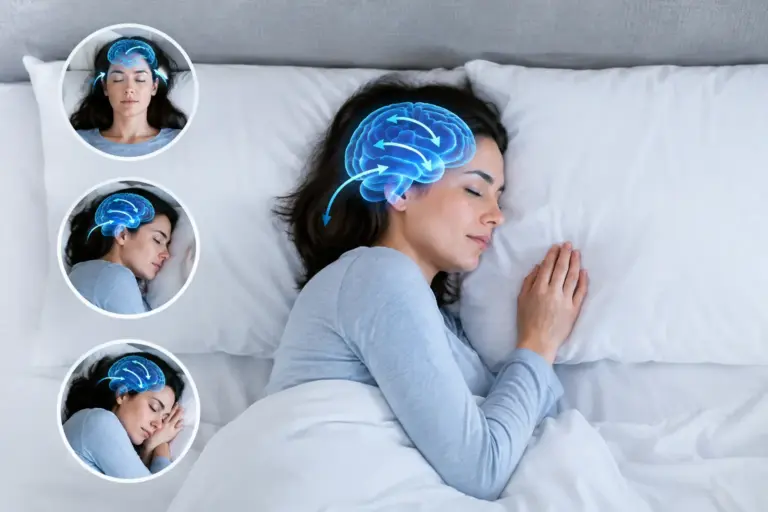
A full night in bed is not the same as a night of brain recovery. The best botanicals for sleep recovery are not simply those that make you feel sedated. They are the ones that may help remove barriers to deep, continuous sleep – the stage when the glymphatic system becomes most active in moving metabolic waste and proteins through the brain’s clearance pathways.
For people worried about brain fog, concussion history, migraines, cognitive aging, or sleep that never feels restorative, this distinction matters. A botanical can be useful when it supports the nervous system without leaving you groggy, disrupted, or dependent on stronger and stronger doses. But no herb can replace the foundations of brain recovery: enough sleep time, a dark room, consistent timing, and evaluation of conditions such as sleep apnea.
What Makes a Botanical Useful for Sleep Recovery?
Sleep recovery has two jobs. First, it must help you get to sleep. Second, and more critically for the brain, it must help you stay asleep long enough to move through normal cycles of slow-wave and REM sleep. Deep sleep is particularly relevant to glymphatic activity because it is associated with the brain-state changes that support fluid movement and nighttime housekeeping.
The science does not yet show that any single botanical directly “turns on” the glymphatic system in humans. That would be an overstatement. What botanicals may do is support the conditions that make restorative sleep more likely: lower stress arousal, a quieter mind, fewer middle-of-the-night awakenings, and a more stable sleep rhythm.
The right choice depends on what is disrupting your night. Racing thoughts call for a different strategy than tension, circadian drift, or waking at 3 a.m. with a stress response.
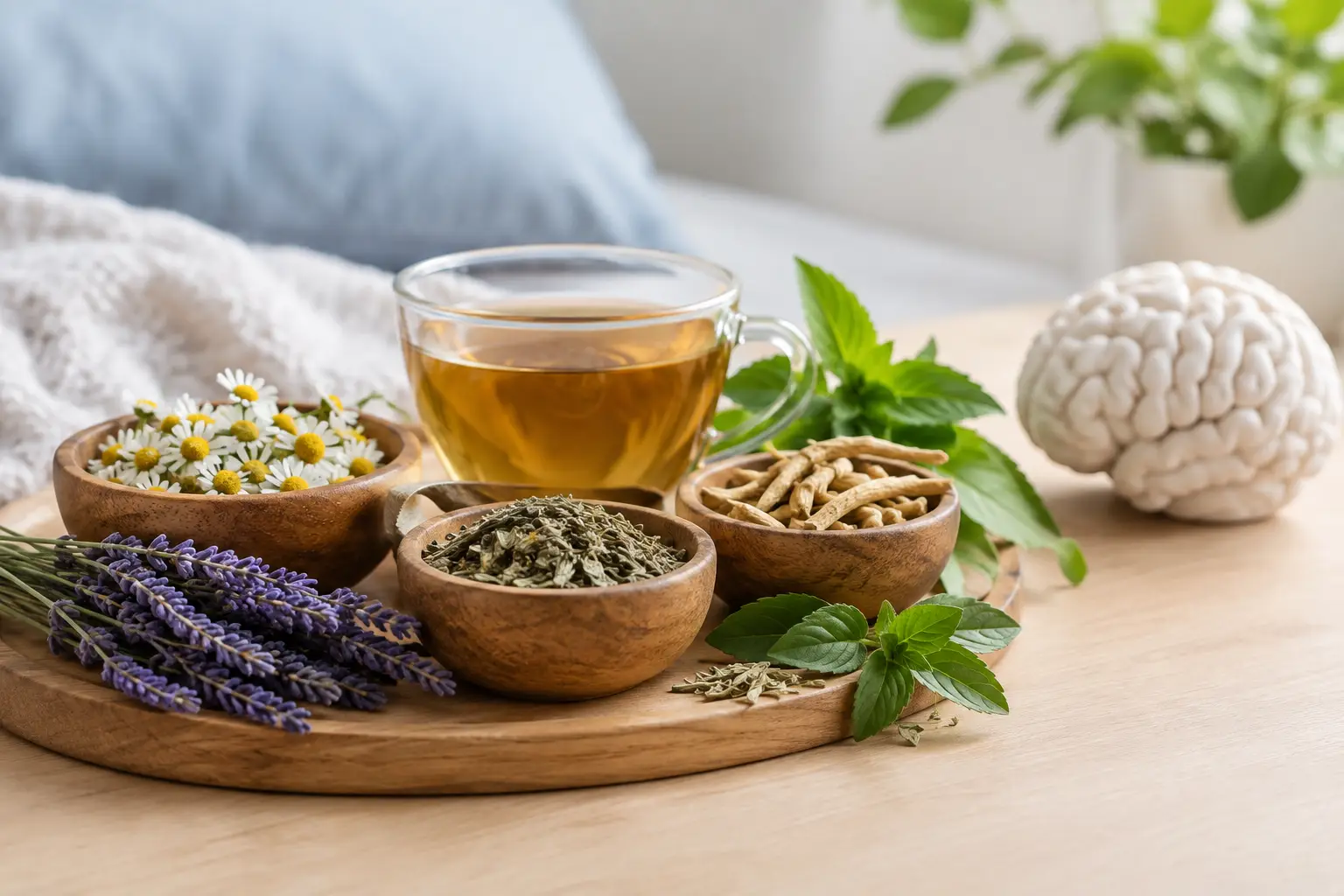
7 Best Botanicals for Sleep Recovery
1. Valerian root for a restless, activated bedtime
Valerian is one of the most recognized herbs for occasional insomnia and sleep difficulty. Its compounds are thought to influence GABA signaling, a calming pathway in the nervous system. For some people, that translates into an easier transition from mental activity to sleep.
Valerian is not universally gentle. It can cause vivid dreams, headache, or next-day heaviness in some users, and its earthy aroma is not for everyone. Consider it when physical restlessness and difficulty falling asleep are the main problem, not as a blanket solution for every poor night of sleep.
2. Passionflower for a mind that will not power down
Passionflower has a long history of use for nervous tension, and early research suggests it may support subjective sleep quality in some people. It is often a sensible option for the person whose body is tired but whose mind keeps reviewing conversations, tasks, and worries.
Its effect tends to be subtle rather than knockout-strong. That can be an advantage for adults who want to support relaxation without feeling heavily sedated. It may also be combined with other calming botanicals, although stacking multiple sedative herbs should be done cautiously.
3. Lemon balm for stress-driven sleep disruption
Lemon balm is a member of the mint family with a mild calming profile. It is especially relevant when stress creates an agitated, unsettled feeling in the evening or when digestive discomfort seems to rise alongside anxiety.
This is often a better fit for a mild-to-moderate stress pattern than for severe, persistent insomnia. It may feel too gentle for some people, but sleep recovery does not always require a heavy hand. The goal is a calmer nervous system that can still produce normal architecture across the night.
4. Chamomile for gentle nighttime unwinding
Chamomile is familiar for good reason. It contains apigenin, a plant compound studied for interactions with pathways involved in relaxation and sleepiness. A warm chamomile tea can also reinforce a practical behavioral signal: the day is over, lights are lowering, and the brain is preparing for rest.
Tea alone may be insufficient for significant sleep disruption, and drinking too much fluid close to bed can create another problem – waking to use the bathroom. Extracts may offer a more concentrated option, but people with ragweed-family allergies should be careful and speak with a clinician if unsure.
5. Ashwagandha for chronic stress and wired exhaustion
Ashwagandha is an adaptogenic botanical often used to support stress resilience. Some clinical research suggests certain extracts may improve sleep quality, sleep onset, or perceived restfulness, particularly in people experiencing stress.
It is most relevant when sleep loss is part of a larger pattern: daytime fatigue, constant pressure, tension, and a feeling of being tired but unable to fully settle. Ashwagandha is not appropriate for everyone. It can interact with medications and may not be suitable for people with certain thyroid, autoimmune, liver, pregnancy, or breastfeeding considerations. This is a botanical worth discussing with a qualified clinician if you have a complex health history.
6. Magnolia bark for nighttime tension
Magnolia bark contains honokiol and magnolol, compounds being investigated for calming effects. It is often considered by people who feel a pronounced edge of tension at night – clenched jaw, tight shoulders, or a body that stays on alert after the day is done.
Human sleep evidence is more limited than the marketing around magnolia sometimes implies, so keep expectations measured. Still, for someone whose main obstacle is stress-related activation, it can be a reasonable botanical to investigate with professional guidance, especially when avoiding stronger sedative approaches is a priority.
7. Tart cherry for sleep timing and recovery support
Tart cherry is not a sedative herb in the usual sense, but it earns a place in conversations about sleep recovery. Tart cherries contain small amounts of melatonin and plant compounds that may support sleep duration or quality in certain settings. They are also of interest to physically active adults managing post-exercise soreness alongside poor sleep.
The trade-off is sugar if you use juice, plus the possibility that any meaningful effect is modest. A low-sugar approach or a standardized product may be preferable for people watching blood glucose. Think of tart cherry as supportive nutrition, not a replacement for treating an underlying sleep disorder.
The Glymphatic Connection: Why Deep Sleep Changes the Conversation
The glymphatic system has reshaped how we think about sleep. Sleep is not passive downtime for the brain. During deeper sleep, the brain engages in clearance processes that help move metabolic byproducts away from neural tissue. When deep sleep is repeatedly fragmented, shortened, or displaced by alcohol, late-night light, untreated apnea, pain, or chronic stress, the brain loses valuable recovery time.
That does not mean you should chase sedation. Alcohol, for example, may make sleep onset feel easier while fragmenting the second half of the night and suppressing normal sleep stages. The same principle applies to any strategy that leaves you unconscious but not restored.
This is why a glymphatic-focused approach starts with sleep quality, not just sleep quantity. A carefully chosen botanical may be part of that approach, but it works best alongside a fixed wake time, morning outdoor light, a cool dark bedroom, and earlier caffeine and alcohol cutoffs. For people seeking a targeted natural approach to glymphatic-system support, My Brain Restore™ is formulated around a rare plant seed preserved with Ultra Chill Milled™ technology.
Use Botanicals With a Recovery Plan, Not as a Nightly Escape
Choose one botanical approach at a time and give it a fair trial rather than taking several new products at once. Track how quickly you fall asleep, how often you wake, how you feel on waking, and whether daytime clarity improves. More is not automatically better, especially when combining herbs with alcohol, antihistamines, prescription sleep medications, anti-anxiety drugs, or other sedating substances.
Persistent insomnia, loud snoring, gasping, morning headaches, dream enactment, severe daytime sleepiness, or worsening memory deserve medical attention. Sleep apnea in particular can repeatedly interrupt oxygenation and deep sleep, making it a major obstacle to brain recovery that no tea or capsule can solve.
The most useful botanical is the one that helps your nervous system step out of high alert while preserving your ability to wake clear-headed and build a consistent deep-sleep routine. Give your brain a protected window to do its nightly work – then let small, intelligent supports earn their place.