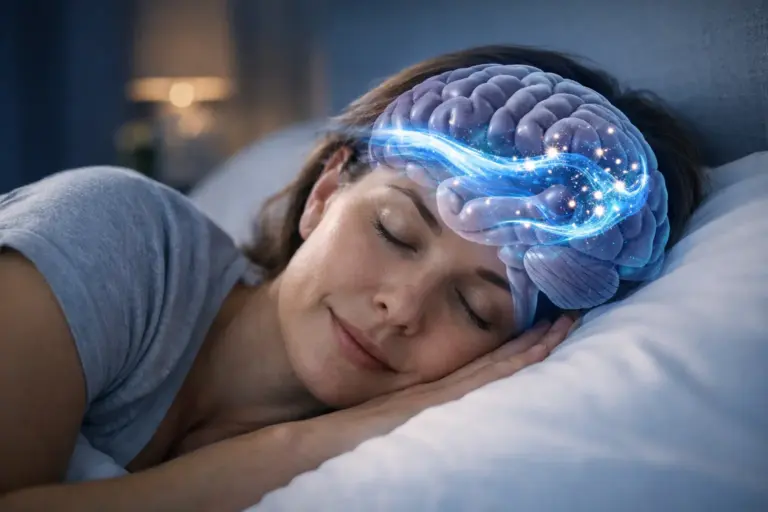
Can Deep Sleep Improve Memory? The Brain-Clearing Link
A name slips away in the middle of a conversation. You reread the same paragraph three times. You wake up after eight hours in bed but still feel mentally dull. These are not always signs that your brain needs more stimulation. Sometimes, the missing piece is the stage of sleep when your brain does some of its most essential maintenance. So, can deep sleep improve memory? For many people, yes: deep sleep is a major part of how the brain stabilizes new information, restores its working capacity, and clears metabolic waste produced during the day.
Memory is not simply created when you learn something. Learning is the first step. The brain must then sort, reinforce, and integrate that information later – especially while you sleep. When deep sleep becomes too short, fragmented, or inconsistent, the result can be more than next-day fatigue. It can mean less efficient memory processing and less time for the brain’s natural overnight cleanup system to operate.
Can Deep Sleep Improve Memory? What the Science Suggests
Deep sleep, also called slow-wave sleep, is the deepest non-REM stage of the sleep cycle. During this phase, the brain produces slow, synchronized electrical waves. Your heart rate and breathing slow, muscles relax, and the outside world becomes harder to wake up to. But deep sleep is not a period when the brain simply switches off. It is active in a different, highly organized way.
One key task is memory consolidation. During the day, the hippocampus acts like a temporary receiving desk for new experiences, facts, names, and skills. During sleep, especially slow-wave sleep, the brain appears to replay selected patterns of recent activity. This process helps transfer and strengthen information across broader cortical networks for longer-term storage.
That is why a night of solid sleep can make newly learned information feel more available the next day. It also helps explain why cramming late into the night often produces weaker recall than studying, sleeping, and reviewing later. Sleep does not replace focused learning, but it helps determine what the brain keeps.
The relationship is not perfectly simple. Deep sleep is particularly associated with certain forms of declarative memory, such as remembering facts and events. REM sleep also contributes to learning, emotional processing, and some forms of skill-based memory. The larger point is that healthy sleep architecture matters. A person can spend plenty of time in bed yet receive too little truly restorative deep sleep if their night is repeatedly interrupted.
Memory Needs a Cleaner Brain Environment
Deep sleep matters for another reason that is increasingly central to brain-health research: the glymphatic system.
The glymphatic system is the brain’s natural waste-clearance network. It helps move fluid through brain tissue and supports the removal of metabolic byproducts that build up during normal waking activity. Research has shown that this clearance process becomes much more active during sleep, with deep sleep believed to be especially important because of the slow-wave patterns and changes in brain fluid movement that occur then.
Think of waking life as a high-output workday for your brain. Neurons communicate constantly, use energy, and produce waste. At night, the brain needs a meaningful recovery window. When that window is repeatedly cut short, the issue may not be just grogginess. Over time, disrupted sleep can leave the brain with less opportunity for the maintenance processes that support cognitive resilience.
This is why chronic poor sleep has drawn attention in conversations about aging, brain fog, mood changes, neurodegenerative disease risk, concussion recovery, migraines, and long COVID-related cognitive symptoms. Sleep disruption does not prove that someone will develop a neurological condition, and no sleep routine can guarantee prevention. But treating deep sleep as optional is a mistake. It is one of the brain’s core recovery states.
Why Deep Sleep Often Declines With Age
Many adults notice that sleep becomes lighter and more fragmented over the years. They may wake earlier, wake more often, or feel less restored despite spending the same number of hours in bed. This is not merely an inconvenience. Age-related changes in sleep can reduce the amount and continuity of slow-wave sleep, exactly when many people become more concerned about memory and mental sharpness.
Other factors can suppress deep sleep at any age. Sleep apnea, chronic pain, stress, depression, alcohol, late-night heavy meals, irregular schedules, some medications, and a bedroom that is too warm can all interfere. Even frequent exposure to bright screens or late-evening work can push the body away from the conditions that support a stable sleep cycle.
One bad night is not a brain-health emergency. The greater concern is the pattern: weeks, months, or years of insufficient or disrupted sleep. If memory issues are persistent, worsening, or affecting daily safety and independence, they deserve medical attention. The same is true for loud snoring, gasping during sleep, severe daytime sleepiness, or frequent morning headaches, which can be signs of sleep-disordered breathing.
How to Protect the Deep Sleep Your Brain Needs
You cannot force deep sleep on command. But you can create conditions that make it far more likely. The most powerful changes are usually not exotic. They are consistent, practical signals that tell the brain when to be alert and when to shift into recovery.
Start with timing. Keep a regular wake time most days, including weekends. A consistent morning anchor helps regulate the body clock and makes sleep pressure build more predictably by night. Aim for enough total sleep opportunity as well. For many adults, that means roughly seven to nine hours, though individual needs vary.
Light exposure matters. Get outdoor light early in the day when possible, then reduce bright light in the final hours before bed. This is not about making life rigid. It is about giving your circadian rhythm a clear contrast between day and night.
Alcohol deserves special attention. It may make some people feel sleepy initially, but it can fragment sleep later in the night and interfere with normal sleep stages. Caffeine can have a similar hidden effect when consumed too late, particularly for people who metabolize it slowly. If deep sleep has become elusive, moving caffeine earlier and reducing evening alcohol are worthwhile experiments.
Your sleep environment should make recovery easier, not harder. A cool, dark, quiet room is often helpful. So is a wind-down routine that lowers stimulation rather than adding more of it. That could mean gentle stretching, reading something low-stakes, slow breathing, or writing tomorrow’s tasks down so they stop circling in your mind.
Physical activity also supports sleep quality for many people. The best approach is the one you can sustain, whether that is walking, strength training, cycling, or another form of movement. Extremely intense exercise close to bedtime can be activating for some people, so pay attention to your own response rather than following a one-size-fits-all rule.
Supporting Long-Term Brain Recovery
Better sleep is not a single-night project. It is a brain-maintenance practice. The goal is not perfection, nor is it obsessively tracking every minute of sleep. Wearables can offer useful trends, but they cannot diagnose sleep stages with the precision of a clinical sleep study. How you function during the day still matters.
For people serious about brain resilience, the most useful question is not, “How can I get more hours in bed?” It is, “What is preventing my brain from reaching and sustaining its deepest recovery state?” The answer might be schedule instability, untreated apnea, stress overload, alcohol, pain, or a combination of smaller habits.
At Glymphatic.com, our focus is helping more people understand that overnight brain maintenance is not a fringe wellness idea. The glymphatic system has changed the conversation about why deep, uninterrupted sleep matters. Supporting sleep habits, overall health, and the body’s natural recovery processes is a proactive step for anyone concerned about memory today and brain health years from now.
Tonight, protect your sleep window the way you would protect an important appointment. Your brain is not doing nothing while you rest. It is organizing what you learned, resetting for tomorrow, and carrying out work that no amount of daytime effort can fully replace.