What Does the Glymphatic System Do?
You can go a few nights with bad sleep and feel foggy, slow, and strangely unlike yourself. That is not just fatigue. If you are asking what does the glymphatic system do, you are really asking how the brain cleans itself, protects itself, and resets itself while you sleep.
That question matters far more than most people realize. The glymphatic system is the brain’s waste-clearance network, and its most important work happens during deep sleep. When this system is working well, it helps move out metabolic waste, excess proteins, and debris that build up during the day. When it is not working well, the brain may be left dealing with a rising trash load at the same time people are trying to stay sharp, age well, and protect long-term cognitive health.
What does the glymphatic system do in the brain?
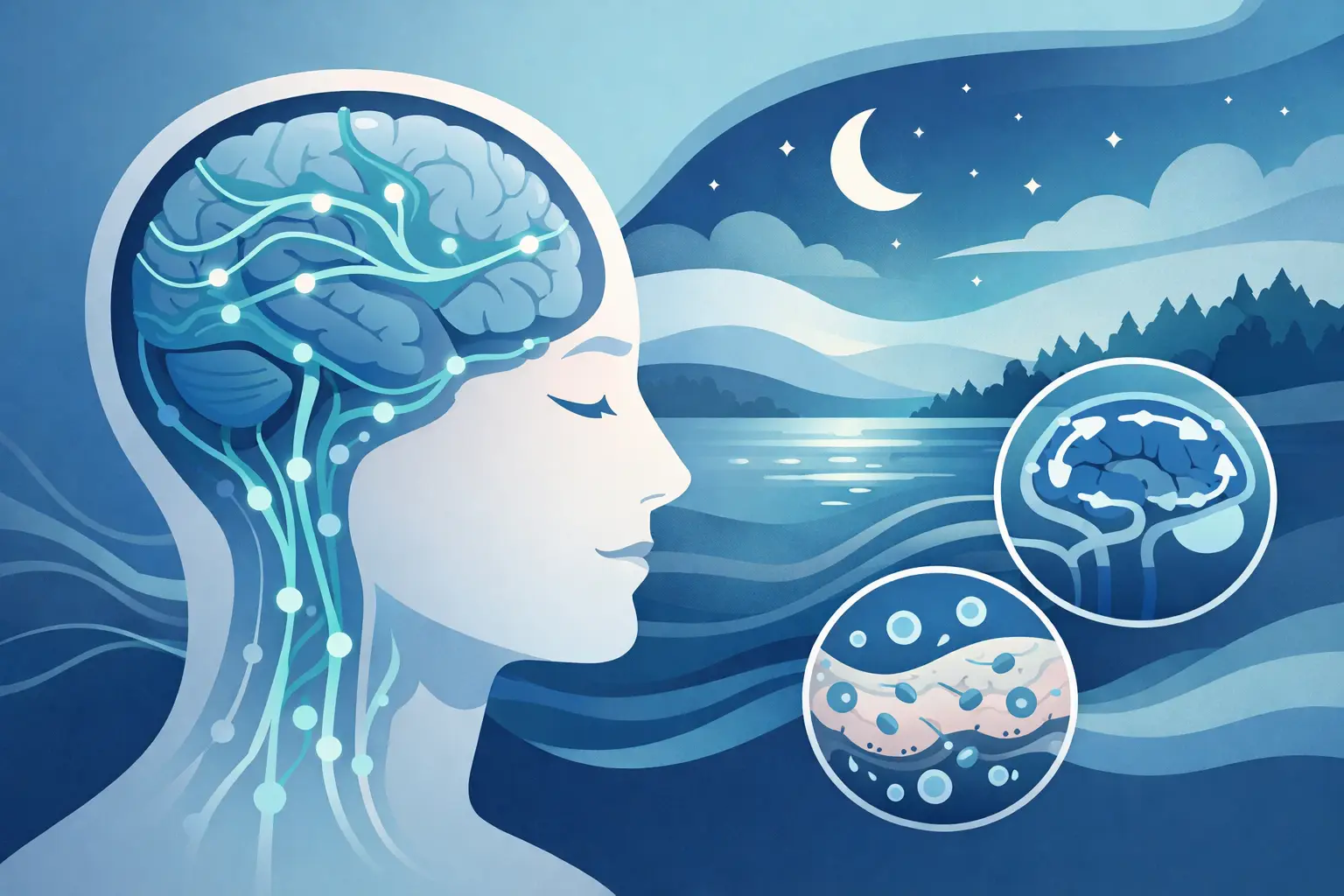
At its core, the glymphatic system clears waste from brain tissue. The brain does not have traditional lymphatic vessels running through it the way much of the body does, so it relies on a specialized fluid-transport system. Cerebrospinal fluid flows alongside blood vessels, moves into brain tissue, mixes with interstitial fluid, and helps wash out waste products.
That is the basic job. But the implications are much bigger. This clearance process helps remove byproducts of normal brain activity, including proteins and compounds that should not linger in excess. Researchers have paid particular attention to amyloid-beta and tau because they are tied to neurodegenerative disease, but the system is not only relevant to those conditions. It also matters for everyday mental clarity, recovery after exertion, and the brain’s ability to maintain itself over time.
A simple way to think about it is this: your brain is metabolically busy all day long. Busy tissue produces waste. If that waste is not moved out efficiently, the environment in and around brain cells becomes less ideal. The glymphatic system exists to help keep that environment cleaner.
Why deep sleep is the glymphatic system’s prime time
The glymphatic system is most active during deep, slow-wave sleep. That is one of the most important facts in this entire conversation because it explains why poor sleep can hit harder than simple tiredness.
During deep sleep, the spaces between brain cells appear to become more favorable for fluid exchange. That shift helps cerebrospinal fluid circulate more effectively through brain tissue and carry waste away. In practical terms, sleep is not just rest. It is scheduled overnight maintenance.
This is why fragmented sleep, short sleep, and low-quality sleep can create a compounding problem. You are not only missing mental recovery. You may also be reducing the time and conditions the brain needs for proper waste clearance. Over weeks, months, and years, that matters.
It also helps explain why so many people with disrupted sleep describe the same cluster of problems: brain fog, slower recall, poor focus, irritability, and that heavy mental feeling that coffee does not fully fix. Not every case comes down to glymphatic dysfunction, of course. Hormones, stress, medications, mood, blood sugar, and underlying illness can all contribute. But the sleep-clearance connection is too important to ignore.
How the glymphatic system affects brain health over time
The reason this topic has become so important is that glymphatic function sits at the crossroads of sleep, aging, inflammation, and neurological resilience.
As people get older, sleep often becomes lighter and more fragmented. That alone may reduce the brain’s ability to perform deep overnight clearance. Add in chronic stress, poor sleep habits, alcohol, sleep apnea, vascular issues, or a history of head injury, and the system can face even more pressure.
That does not mean every night of bad sleep causes lasting harm. The body is adaptive, and biology is rarely all-or-nothing. But it does mean the cumulative pattern matters. A brain that repeatedly misses deep restorative sleep may also be missing one of its key housekeeping windows.
This is one reason the glymphatic system is now part of so many serious conversations around cognitive decline, Alzheimer’s-related concerns, Parkinson’s, traumatic brain injury, concussion recovery, migraine burden, and long COVID brain fog. The system is not the only factor in those conditions. Anyone claiming it explains everything is oversimplifying the science. Still, it is increasingly clear that impaired waste clearance is not a side issue. It may be one of the hidden drivers that has been underappreciated for years.
What can interfere with glymphatic clearance?
Sleep quality is the biggest factor most people can feel in real time, but it is not the only one. The glymphatic system depends on fluid movement, vascular pulsation, healthy brain-support cells, and the right physiological conditions. If those conditions are off, clearance may be less efficient.
Sleep apnea is a major example. People may spend enough hours in bed but still fail to get the quality of oxygenation and sleep architecture needed for true restoration. Head trauma is another. After a concussion or more serious brain injury, the brain’s normal cleaning and recovery systems can be disrupted just when they are most needed.
Inflammation may also play a role. When the brain and body are under chronic inflammatory stress, recovery becomes harder and waste management may become less efficient. Even sleeping position has been studied as a possible variable, though that remains more nuanced than some headlines suggest. The larger point is this: glymphatic function is influenced by the whole terrain of brain health, not just one habit.
What does the glymphatic system do for people dealing with brain fog?
For many readers, this is the most practical question. If you feel mentally dull, forgetful, or slower than you used to be, what does the glymphatic system do that might actually matter to your day?
It helps create the conditions for a cleaner, more stable brain environment. When waste is being cleared more effectively during sleep, the brain is better positioned for next-day performance. That does not mean glymphatic support is a magic fix for every case of brain fog. Brain fog is a symptom, not a diagnosis, and causes vary widely.
Still, this system is one of the most compelling reasons to take sleep-driven brain recovery seriously. A lot of people have been taught to think of sleep as passive downtime. It is not. It is active neurological maintenance. If you are waking up unrefreshed, dragging through the afternoon, or feeling older mentally than you should, the question is not only how many hours you slept. It is whether your brain got enough real cleaning time.
Can you support the glymphatic system?
Yes, but this is where honesty matters. There is no single habit, device, or supplement that replaces deep sleep. If sleep is chronically broken, that has to be addressed at the foundation.
Supporting glymphatic function usually starts with protecting slow-wave sleep as aggressively as you would protect diet or exercise. That means consistent sleep timing, a dark sleep environment, managing alcohol intake, and taking snoring or suspected sleep apnea seriously rather than brushing it off. It also means respecting recovery after illness, concussion, or periods of heavy stress when the brain may need more support, not less.
Beyond lifestyle, many people are now looking for targeted ways to support the biology behind brain recovery. That is where interest in glymphatic-focused nutrition and supplementation has grown. The field is still developing, and people should be skeptical of generic products that simply relabel standard sleep ingredients as brain-cleaning solutions. If a product claims to support the glymphatic system, the mechanism should matter, the sourcing should matter, and the science story should be more specific than vague promises.
That is exactly why this category exists. Glymphatic.com has focused on educating the public about this overlooked system while building support around a more specialized approach to brain maintenance during sleep.
Why this system deserves more attention
For years, brain health conversations centered on symptoms after the fact: memory issues, fatigue, poor focus, mood changes, cognitive decline. The glymphatic system shifts the conversation upstream. It asks a more powerful question: is the brain getting the overnight cleaning and recovery it needs to stay resilient?
That change in perspective is a big deal. It gives people a framework that connects sleep, aging, mental sharpness, and neurological protection in a way that feels biologically coherent. It also explains why some people can seem functional on the surface while still feeling like their brain is slipping beneath the noise of daily life.
If you have been worried about brain fog, recovery, or long-term cognitive wellness, do not treat sleep as a side issue. Your brain uses the night to do work you cannot afford to miss. The more you understand that hidden shift, the more clearly you can act on it.