Concussion Symptoms vs Migraine Symptoms Explained
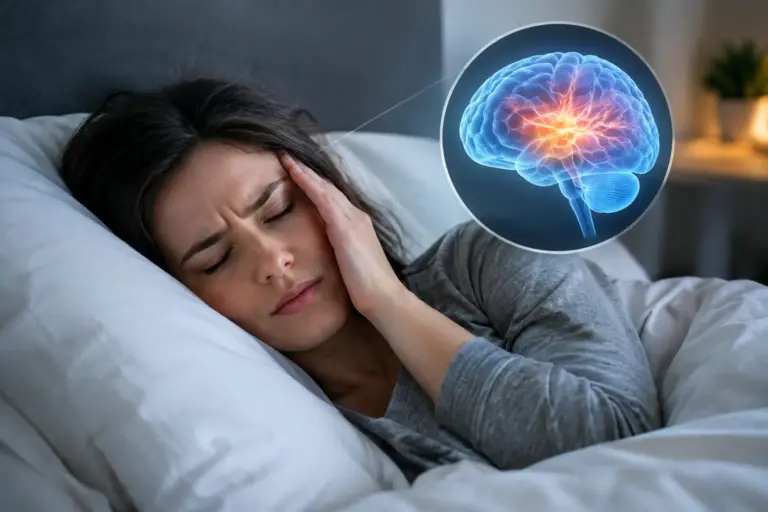
A pounding headache, nausea, light sensitivity, and mental fog can feel unmistakably like a migraine. But after a fall, car crash, sports collision, or other blow to the head, those same symptoms may signal a concussion. Understanding concussion symptoms vs migraine symptoms is not an exercise in self-diagnosis. It is a decision point: a head injury deserves timely medical attention, even when the person feels mostly normal at first.
The overlap is real because both conditions can disrupt the brain systems that process pain, light, balance, concentration, and sensory input. They can also occur together. A concussion can trigger a post-traumatic headache with migraine-like features, especially in people with a personal or family history of migraine. The key is not finding one symptom that settles the question. It is looking at the timing, the trigger, the full symptom pattern, and any danger signs.
Why the distinction matters after a head injury
A concussion is a mild traumatic brain injury caused by a bump, blow, jolt, or force that makes the brain move rapidly within the skull. Loss of consciousness is not required. Someone can walk away from an impact, hold a conversation, and still develop symptoms over the next several hours or days.
Migraine is a neurologic condition marked by recurring attacks, often involving headache, nausea, and heightened sensitivity to light, sound, smell, or movement. Some people have aura symptoms, such as visual changes, tingling, or trouble finding words, before or during an attack. Migraine can be disabling, but a familiar migraine pattern does not rule out a concussion after an injury.
That is the critical distinction. If symptoms began after head trauma, do not dismiss them as just another migraine without medical guidance. A new or dramatically different headache after an impact needs assessment because more serious injuries, including bleeding in or around the brain, must be ruled out.
Concussion symptoms vs migraine symptoms: where they overlap
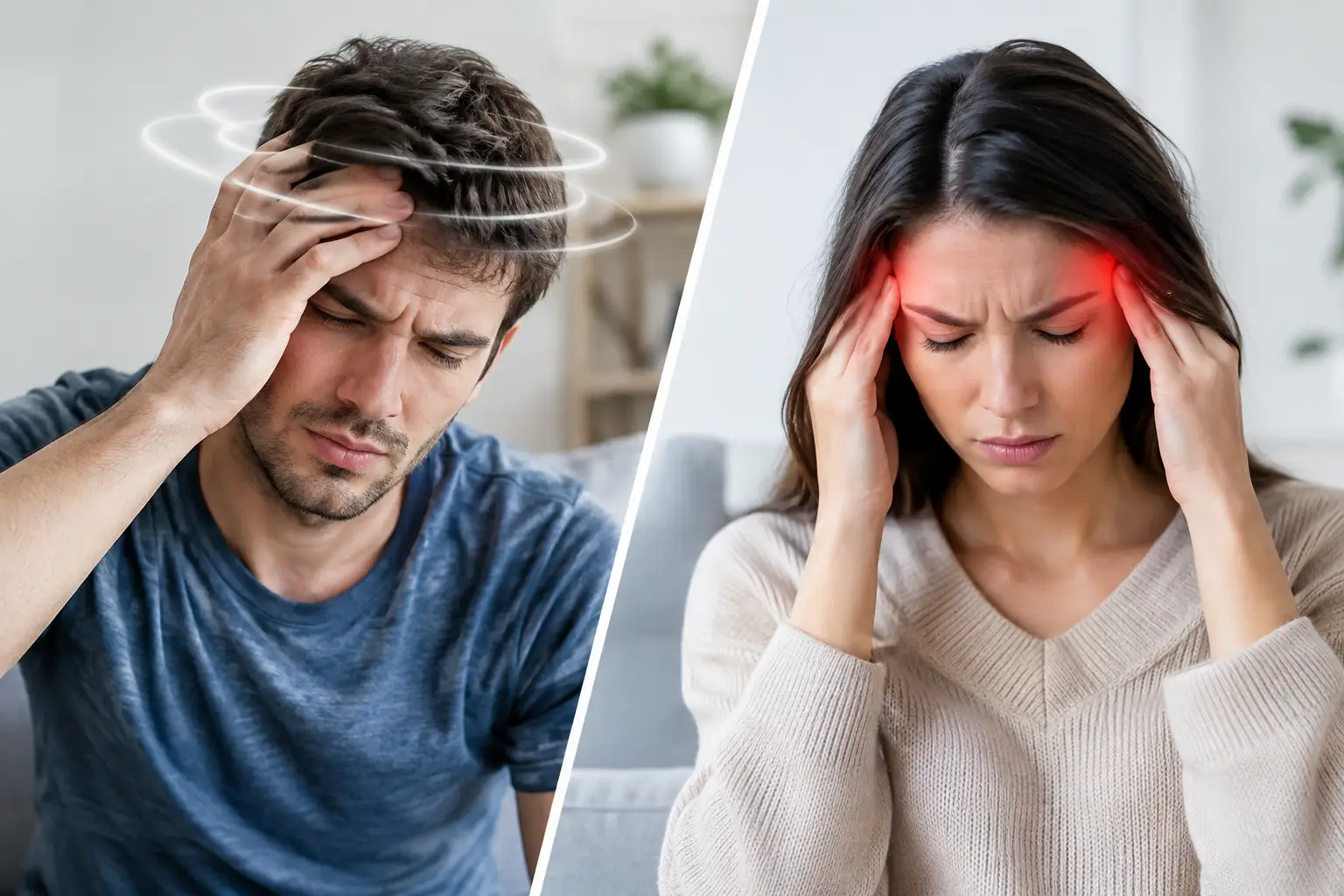
Headache is the most obvious shared symptom, but it is far from the only one. Both concussion and migraine may cause nausea, vomiting, dizziness, fatigue, blurred vision, sensitivity to light or noise, mood changes, difficulty concentrating, and sleep disruption.
This overlap can be especially confusing for adults who already live with migraines. A concussion-related headache may be throbbing, one-sided, or worsened by activity, just like a migraine. It may also respond poorly to a person’s usual migraine plan. Conversely, the stress, pain, dehydration, and disrupted sleep surrounding an accident can provoke a migraine without a concussion.
Context carries weight. A migraine may arise from familiar triggers such as skipped meals, hormonal shifts, stress, certain foods, weather changes, or poor sleep. A concussion becomes more likely when symptoms follow a head impact or forceful body hit, particularly when they are paired with cognitive, balance, visual, or behavioral changes that are unusual for that person.
Signs that lean more toward concussion
Concussion symptoms often include feeling dazed, slowed down, mentally foggy, confused, or unable to recall events immediately before or after the injury. People may repeat questions, lose their train of thought, struggle to follow a conversation, or notice that ordinary mental tasks take far more effort.
Balance and coordination changes are also common. The person may feel unsteady, clumsy, dizzy when standing, or disoriented in busy visual environments. Vision may seem blurred or double, and eye movement or screen use may make symptoms worse. Sleep can shift in either direction, with some people sleeping more than usual and others unable to sleep normally.
Irritability, anxiety, sadness, and a lower tolerance for noise, crowds, work, or exercise can also appear after concussion. These are not character flaws. They can be part of the brain’s recovery response after injury.
Signs that lean more toward migraine
Migraine often follows a recognizable personal pattern. The headache may build gradually and last from hours to several days. Throbbing or pulsating pain, frequently on one side of the head, is common, though not universal. Physical activity may worsen the pain, and nausea or sensory sensitivity may be prominent.
Aura is more specific to migraine, although neurologic symptoms always deserve attention when new or unusual. Aura can include flashing lights, zigzag lines, blind spots, pins-and-needles sensations, or temporary language difficulty. It typically develops gradually and resolves, but first-time neurologic symptoms should never be assumed to be migraine.
A history of similar, clinician-diagnosed attacks is useful information. Still, after a head injury, even a familiar-looking migraine must be viewed through a different lens. The injury changes the risk calculation.
When symptoms require emergency care
Call 911 or seek emergency evaluation immediately after a head injury if a person has worsening or severe headache, repeated vomiting, increasing confusion, unusual behavior, slurred speech, weakness or numbness, seizures, unequal pupils, loss of consciousness, or difficulty staying awake.
Also treat fluid or blood from the nose or ears, worsening neck pain, poor coordination, double vision, or one-sided facial drooping as urgent warning signs. In older adults, people taking blood thinners, and anyone with a bleeding disorder, the threshold for urgent evaluation should be especially low. Brain bleeding can initially look deceptively mild.
Do not drive yourself if you are dizzy, confused, visually impaired, or concerned about a neurologic emergency. Do not leave a potentially concussed person alone if symptoms are escalating. A normal-looking scalp or a lack of visible injury does not prove the brain is unharmed.
What to do in the first days after a possible concussion
The first priority is evaluation by a qualified clinician. They can assess memory, balance, eye movements, neurologic function, neck injury, and the need for imaging. CT or MRI scans are not required for every concussion, and a normal scan does not rule one out. Imaging is used primarily when clinicians need to look for bleeding or another structural injury.
After medical guidance, recovery usually means relative rest rather than total isolation in a dark room for days. The brain often benefits from a gradual return to ordinary activity below the level that sharply worsens symptoms. Too much exertion too soon can aggravate symptoms, while prolonged complete inactivity can also prolong recovery for some people.
Avoid alcohol, recreational drugs, and activities with a risk of another impact until cleared. Do not return to contact sports, high-risk work, or driving based only on feeling better for a few hours. A second injury before recovery can have serious consequences.
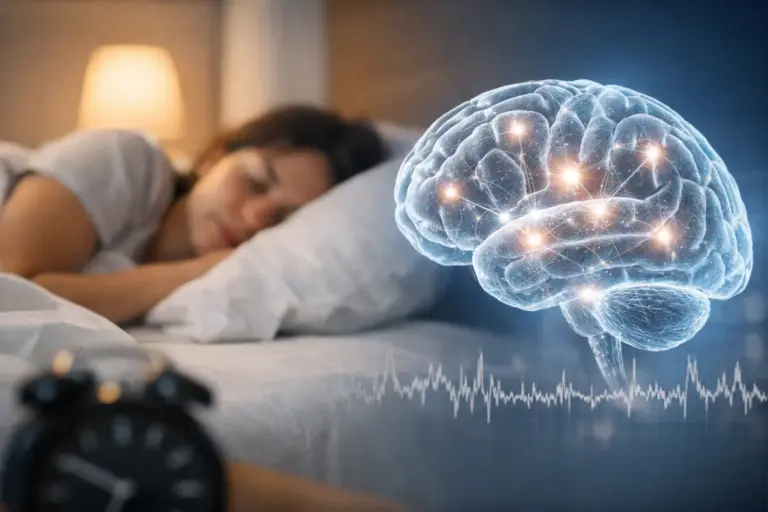
Sleep deserves particular attention. Deep sleep is a major period of restoration for the brain, including activity in the glymphatic system, the network involved in moving metabolic waste out of brain tissue. A concussion can disrupt sleep quality, and poor sleep can intensify headache, mood symptoms, and cognitive fatigue. Protect a consistent sleep window, reduce late-night screens and alcohol, and tell your clinician if insomnia, excessive sleepiness, or loud snoring develops after the injury.
The migraine connection after concussion
Post-traumatic headache is one of the most common lingering symptoms after concussion. For many people, it resembles migraine, with pounding pain, nausea, light sensitivity, and motion sensitivity. This does not mean the injury is imaginary or that the answer is simply to push through it. It means the nervous system may be temporarily more sensitive and needs a recovery plan tailored to the person’s symptoms.
Treatment may include hydration, regular meals, sleep support, carefully chosen pain strategies, physical therapy for neck or vestibular problems, vision rehabilitation, or migraine-specific treatment. What helps depends on the pattern. Frequent use of certain pain medications can itself contribute to rebound headaches, so medication decisions should be made with a clinician.
If symptoms persist beyond the expected early recovery period, worsen with time, or interfere with work, school, relationships, or sleep, ask for follow-up. Persistent symptoms are not a reason to give up. They are a reason to look more closely at the drivers, including headache phenotype, sleep disruption, mood, neck injury, balance dysfunction, and visual strain.
A headache may feel familiar, but the circumstances matter more than familiarity. When symptoms follow a hit, fall, or jolt, give the brain the caution it deserves: get assessed, protect recovery, and let new or worsening neurologic symptoms set the urgency.