Glymphatic System After Concussion
A concussion can leave you feeling strangely unlike yourself long after the hit is over. The headache may fade, but the brain fog, poor sleep, pressure, irritability, and mental slowdown can linger. That is one reason the glymphatic system after concussion deserves far more attention than it gets.
Most people are told to rest, limit stimulation, and wait. That advice has value, especially early on. But it misses a deeper question: what if part of concussion recovery depends on how well the brain can clear the metabolic debris, inflammatory byproducts, and damaged proteins that build up after injury?
Why the glymphatic system after concussion matters
The glymphatic system is the brain’s cleanup network. It uses cerebrospinal fluid to move through brain tissue, wash away waste, and support neurological maintenance. This process is most active during deep sleep, which is one reason sleep is not just comforting after brain injury – it is biologically central to recovery.
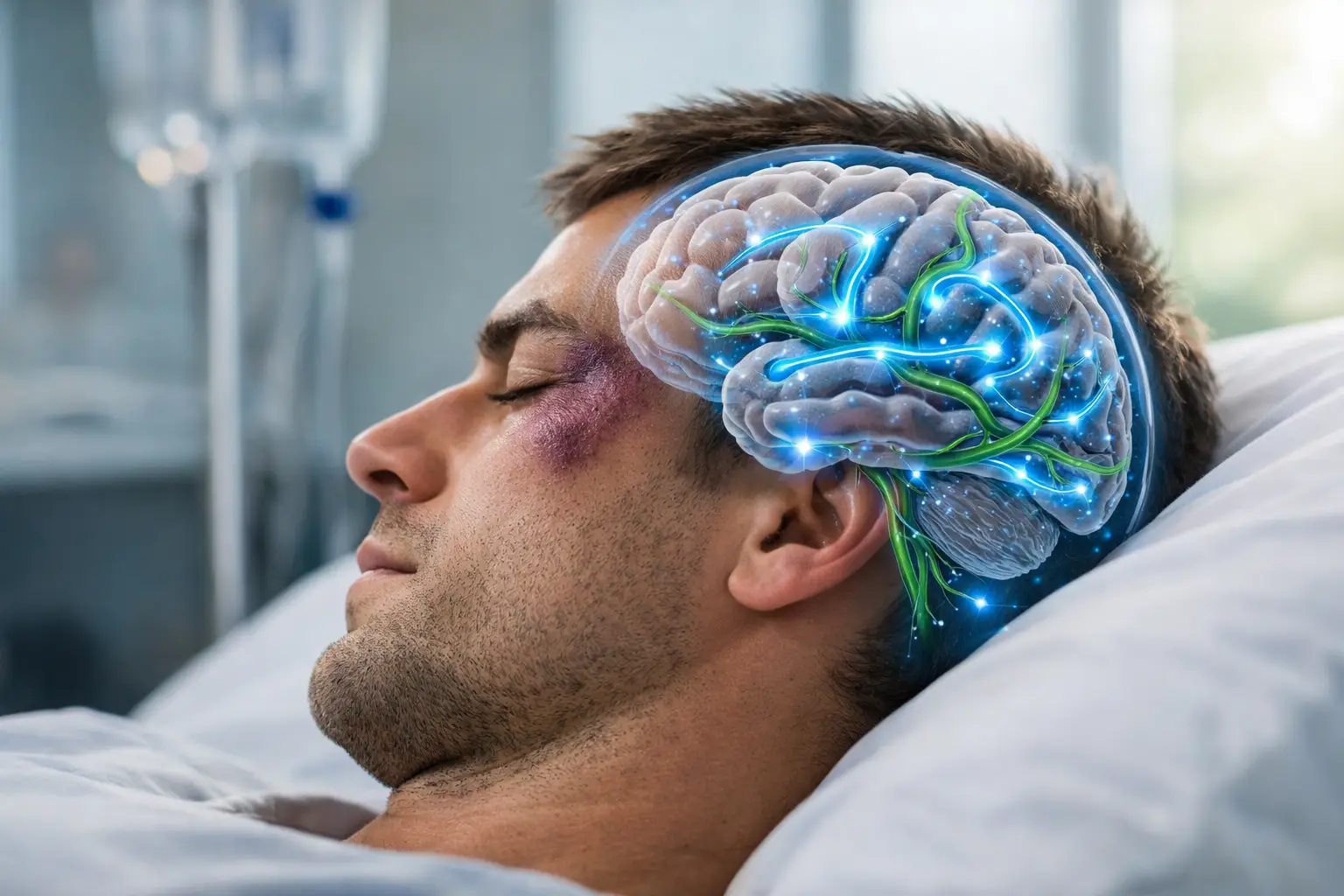
After a concussion, that cleanup process may be disrupted. Mechanical force can affect blood vessels, brain tissue, fluid movement, and the delicate cellular structures that help guide waste clearance. At the same time, concussion often disrupts sleep architecture, and that creates a second problem. If deep sleep is impaired, the brain may lose access to the very window when glymphatic activity is strongest.
That combination matters. An injured brain may produce more waste while being less able to clear it. For people who continue to struggle with post-concussion symptoms, this is a powerful framework for understanding why recovery can stall.
What happens in the brain after a concussion
A concussion is often described as a mild traumatic brain injury, but the word mild can be misleading. Even when scans look normal, the brain can still be dealing with a cascade of changes. There may be inflammation, altered energy metabolism, ionic imbalance, changes in cerebral blood flow, and stress to neurons and supporting cells.
The result is not always dramatic damage. Often, it is dysfunction. The brain has to restore order while still trying to perform memory, attention, mood regulation, and coordination. That helps explain why someone can feel exhausted by normal conversation, lose track of simple tasks, or wake up feeling unrefreshed for weeks or months.
Now add glymphatic impairment to that picture. If fluid exchange is less efficient, waste products may linger longer than they should. That does not mean every symptom is caused by poor glymphatic flow, and it does not mean the mechanism is identical in every patient. But it does mean the cleanup side of brain recovery deserves a place in the conversation.
Sleep disruption is the hidden obstacle
Concussion and poor sleep often travel together. Some people cannot fall asleep. Others sleep more but wake feeling worse. Some develop fragmented sleep, vivid dreams, or a reversal of their normal sleep-wake rhythm.
This is more than an inconvenience. Deep, stable sleep is when the brain appears to do some of its most important maintenance work. If concussion reduces sleep quality, the glymphatic system may lose efficiency right when demand is high. That can create a cycle: brain injury disrupts sleep, poor sleep weakens brain cleanup, and weak cleanup may contribute to ongoing symptoms.
For middle-aged and older adults, this issue may be even more relevant. Glymphatic activity is already thought to decline with age. So when concussion enters the picture, the brain may be dealing with both injury-related disruption and age-related reduction in nighttime clearance.
Symptoms that may overlap with glymphatic dysfunction
No doctor can diagnose glymphatic dysfunction from symptoms alone, and concussion symptoms are influenced by many systems at once. Still, the pattern is worth noticing.
People often report persistent brain fog, slowed thinking, headaches, light sensitivity, poor concentration, nonrestorative sleep, dizziness, and a sense that the brain just is not clearing. That last phrase is not a medical diagnosis, but patients say it often because it captures the experience. The mind feels congested.
This is where the glymphatic model is useful. It gives a biological explanation for why recovery may depend on more than reducing symptoms during the day. It may also depend on restoring the brain’s ability to recover at night.
Can you support the glymphatic system after concussion?
Yes, but with an important caveat. Support is not the same as a guaranteed fix. Concussion recovery is highly individual, and anyone with severe symptoms, repeated injuries, worsening headaches, neurological changes, or prolonged impairment should work with a qualified medical professional.
That said, several practical strategies make sense because they align with how the glymphatic system functions.
Protect deep sleep aggressively
If there is one pillar to prioritize, it is sleep quality. Not just more time in bed, but better physiological sleep. A consistent bedtime, a dark room, reduced late-night light exposure, and less alcohol can matter more than people think. Alcohol may make you sleepy, but it tends to fragment sleep and can work against restorative brain recovery.
Caffeine timing also matters. For some people, even early afternoon caffeine interferes with deep sleep. Others tolerate it better. This is one of those it depends scenarios. The key is to judge by sleep quality, not habit.
Respect the recovery window
Pushing too hard too soon can backfire. Many people feel pressure to return to full exercise, full screen time, full work output, and full social activity before the brain is ready. Some graded activity is often appropriate, but overload can worsen symptoms and disturb sleep.
A better approach is strategic pacing. The brain needs challenge, but it also needs intervals of true recovery. That balance is especially important when post-concussion symptoms have lasted longer than expected.
Support circulation and overall metabolic health
The glymphatic system does not operate in isolation. It is influenced by sleep, vascular function, inflammation, and whole-body physiology. Gentle movement, hydration, stable blood sugar habits, and a nutrient-dense diet can help create better conditions for recovery.
Hydration alone is not a miracle solution, and it is often oversold. But fluid balance does matter for brain physiology. The goal is not extreme water intake. It is steady, adequate hydration as part of an overall recovery plan.
Think beyond symptom masking
Many people chase temporary relief for headaches, fatigue, or poor focus without asking what supports long-term repair. Symptom management has its place, but recovery should also include the systems that maintain brain resilience.
That is where targeted glymphatic support becomes compelling. Glymphatic.com has built its mission around a simple but overlooked idea: if the brain’s cleaning system is central to recovery, then supporting that system may be one of the smartest long-game strategies for neurological wellness.
The bigger issue: concussion may not end when the impact ends
This is the part too many people miss. A single concussion can have effects that outlast the obvious event, and repeated concussions raise even more concern. Researchers have spent years examining how brain injury relates to persistent inflammation, abnormal protein accumulation, and long-term neurological risk.
That does not mean every concussion leads to decline. It does mean brain recovery should be taken seriously, especially when symptoms linger or when a person has a history of repeated impacts, poor sleep, aging-related cognitive concern, or preexisting neurological vulnerability.
The glymphatic system sits right in the middle of that conversation because it is tied to clearance. When the brain cannot clean well, it may not recover well. For a public that has been taught to think about brain health mostly in terms of neurotransmitters and memory tricks, this is a major shift.
When recovery is slower than expected
Some people bounce back quickly. Others do everything they were told and still feel off months later. That does not mean they are imagining it, and it does not mean they have failed recovery.
It may mean the injury affected more than one system at once – sleep, autonomic balance, vision, vestibular processing, inflammation, and glymphatic clearance among them. The smartest response is not frustration. It is a broader model of care.
If you are still dealing with brain fog, unrefreshing sleep, low mental stamina, or that heavy post-concussion feeling, it is reasonable to ask a different question. Not just, how do I get through the day? Ask, what is happening in my brain at night, when recovery is supposed to occur?
That question changes everything. It shifts attention from surface symptoms to biological maintenance. And for people who want to protect brain function for the long term, that is where real urgency belongs.
A concussion is not only an injury of impact. It can also become an injury of impaired cleanup, poor sleep, and incomplete recovery. Support the brain where it repairs itself most deeply, and you give healing a better chance to happen.