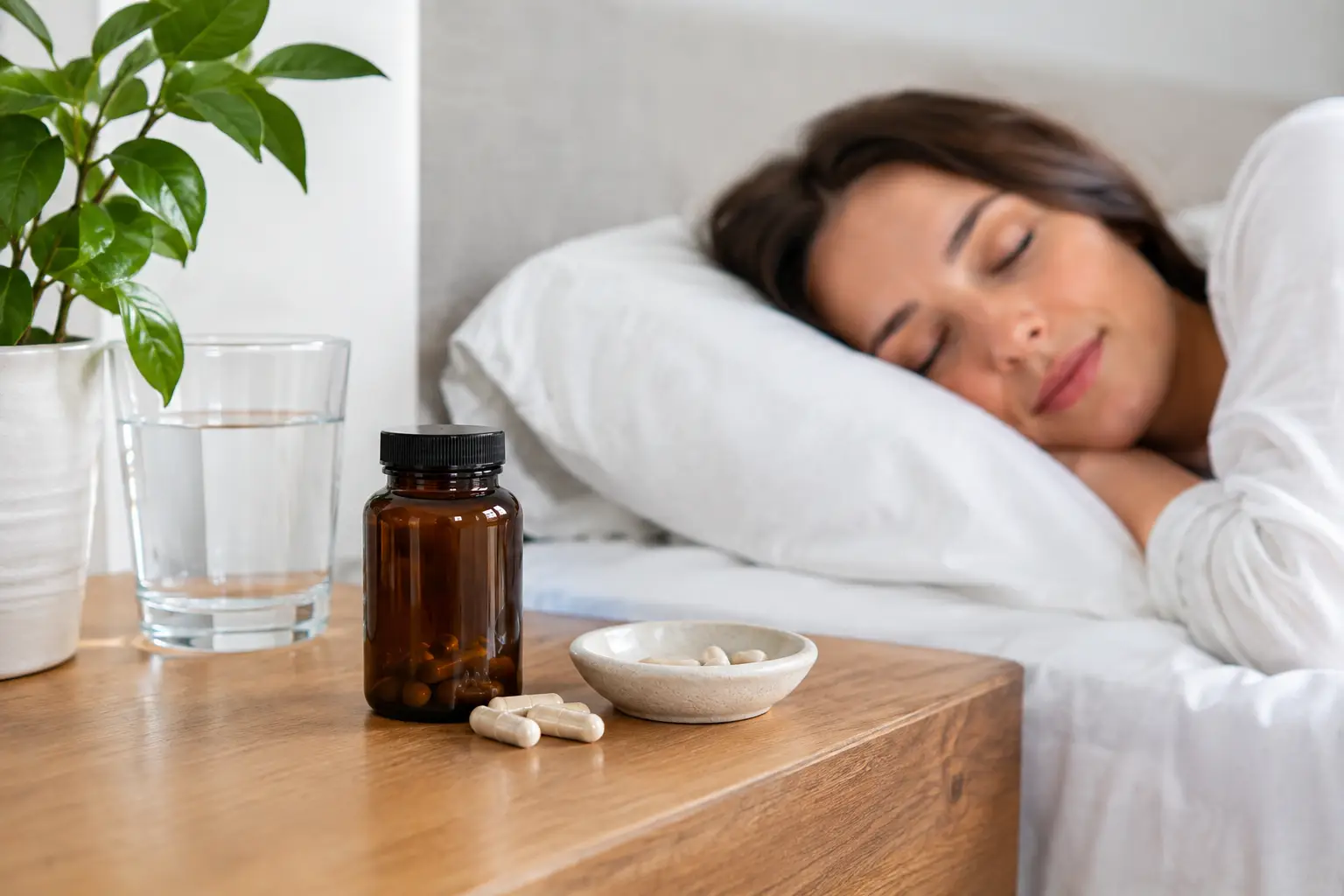
Natural Sleep Recovery Supplement Review, Explained
Waking up after eight hours in bed but still feeling mentally dull is not simply a sleep problem. It may be a recovery problem. This natural sleep recovery supplement review looks beyond the usual promises of relaxation and asks a more urgent question: what is actually supporting the brain while you sleep?
Deep sleep is when the brain’s glymphatic system becomes especially active. This recently recognized clearance network helps move metabolic waste, proteins, and fluid through the brain. When restorative sleep is repeatedly disrupted, the consequences can show up as brain fog, slower recall, low resilience, headaches, mood changes, and the unsettling sense that your mind is not recovering as it once did.
Why Most Sleep Supplements Miss the Recovery Question
The sleep supplement aisle is built around one narrow goal: help people fall asleep. That can be useful, but falling asleep and recovering during sleep are not interchangeable.
Melatonin may help with circadian timing in certain situations, such as jet lag or a delayed sleep schedule. Magnesium may support relaxation for some people. Herbal ingredients such as valerian, lemon balm, and passionflower are often used to ease tension. None of that automatically means a product supports the biological work the brain performs during deep, restorative sleep.
A meaningful natural sleep recovery supplement should be evaluated through a wider lens. Does it merely make you feel sedated? Does it support a consistent sleep schedule? Does it address stress without leaving you groggy? More importantly for brain health, does its formulation make sense in the context of glymphatic function, circulation, inflammation, and the conditions required for high-quality deep sleep?
This distinction matters most after age 40, when sleep architecture often changes and concerns about memory, mental sharpness, concussion history, migraines, or neurodegeneration become harder to ignore. The goal is not to chase a knockout effect. It is to protect the nightly recovery process the brain depends on.
Natural Sleep Recovery Supplement Review Criteria
A credible review starts by separating marketing language from meaningful standards. “Natural” is not a synonym for effective, and “non-habit-forming” does not tell you whether a formula is appropriate for your body or your health history.
1. A purpose beyond sedation
Be cautious with formulas built entirely around drowsiness. Strong sedating ingredients can help in short-term circumstances, but they may not be the right answer for someone who wants clearer mornings and sustainable brain support. A supplement intended for recovery should complement the body’s own sleep biology rather than force unconsciousness.
Look for a formulation that recognizes the difference between sleep onset, sleep continuity, and deep sleep quality. Someone who cannot fall asleep has a different need than someone who sleeps seven hours but wakes with brain fog. The best product category is not always the most heavily sedating one.
2. Transparent ingredients and meaningful doses
Avoid proprietary blends that hide individual amounts. If an ingredient is included, you should be able to see how much you are taking and understand why it belongs in the formula.
The research behind many popular sleep ingredients is mixed, dose-dependent, or focused on narrow outcomes. A formula should not rely on a long ingredient label to create the appearance of sophistication. A few intentional ingredients, clearly dosed and carefully processed, can be more compelling than a crowded capsule with no coherent purpose.
3. A brain-recovery framework
The most forward-looking formulas recognize that sleep is not only about rest. It is a maintenance window for the brain.
During deep sleep, changes in brain activity and fluid movement are associated with glymphatic clearance. Researchers continue to investigate exactly how this system works in humans and how it relates to aging, sleep disruption, traumatic brain injury, and neurodegenerative disease. That research does not justify claiming that a supplement can treat Alzheimer’s disease, Parkinson’s disease, or other medical conditions. It does make glymphatic health a serious and overdue consideration for people who care about long-term cognitive resilience.
4. Safety that fits your real life
Natural ingredients can still interact with medications or be inappropriate for certain health conditions. This is especially relevant for adults taking antidepressants, blood thinners, blood pressure medication, diabetes medication, seizure medication, or prescription sleep aids.
If you snore loudly, stop breathing during sleep, wake gasping, or struggle with severe daytime sleepiness, do not use a supplement as a substitute for evaluation. Sleep apnea can fragment deep sleep and strain cardiovascular and cognitive health. The same caution applies to persistent insomnia, major mood changes, new neurological symptoms, or cognitive decline that is accelerating.
The Glymphatic Connection Is Worth Your Attention
The glymphatic system is often described as the brain’s cleaning network, though that shorthand only tells part of the story. It is a fluid-based pathway involved in moving waste products and metabolic byproducts out of brain tissue. Its activity appears closely tied to sleep, particularly slow-wave sleep.
That is why chronic short sleep is not simply a matter of feeling tired the next day. Repeatedly cutting sleep short may reduce the time and conditions the brain needs for restoration. Alcohol close to bedtime, untreated sleep apnea, irregular sleep schedules, chronic stress, and certain medications can all interfere with the quality or continuity of sleep.
For people navigating long COVID brain fog, past concussions, aging-related forgetfulness, migraine patterns, or mental fatigue, this creates a practical shift in thinking. Instead of asking only, “What can help me sleep tonight?” ask, “What supports the conditions my brain needs to recover night after night?”
That is the standard a natural sleep recovery product should meet. It should fit into a broader commitment to deep sleep and brain maintenance, not distract from it.
Where My Brain Restore™ Fits
My Brain Restore™ takes a more specialized position than a conventional sleep aid. Rather than presenting itself as another melatonin-style shortcut, it is designed around support for the glymphatic system through a rare plant seed preserved with proprietary Ultra Chill Milled™ technology.
That focus will appeal most to people who view sleep as a brain-recovery period, not merely a pause between busy days. The formulation is not a replacement for treating sleep apnea, addressing medication side effects, or working with a clinician after a concussion or neurological diagnosis. Its relevance is in supporting the overlooked biology of nighttime brain maintenance.
The trade-off is that this approach may not satisfy someone seeking an immediate sedative sensation. But that is also the point. A product built for glymphatic support should be judged by whether it belongs in a long-term brain-health strategy, alongside the habits that protect restorative sleep.
The Habits That Determine Whether Any Supplement Can Help
Even an intelligently designed supplement cannot compensate for a sleep environment that works against the brain every night. Glymphatic support begins with protecting sleep depth and continuity.
Keep your wake time reasonably consistent, including on weekends. Morning outdoor light helps anchor circadian rhythm, while bright light at night can delay it. Limit alcohol near bedtime because it may make you sleepy initially while disrupting sleep later in the night. If caffeine affects you, move it earlier rather than assuming an afternoon cup is harmless.
Temperature matters too. A cool, dark room supports the body’s natural transition toward sleep. So does addressing the mental loop that keeps many people awake: unfinished work, constant news exposure, and the belief that sleep is optional when life gets demanding.
For caregivers and high-performing adults, this can feel like a difficult message. Yet protecting deep sleep is one of the most practical forms of preventive brain care available. The brain does not postpone its maintenance needs because your calendar is full.
Who Should Be Careful With Sleep Recovery Supplements?
A natural product can be part of a thoughtful wellness plan, but it should not become a reason to self-manage serious symptoms. Speak with a qualified healthcare professional before starting a supplement if you are pregnant or breastfeeding, preparing for surgery, managing a chronic condition, or taking prescription medication.
People with diagnosed sleep disorders should also be especially deliberate. Insomnia can involve anxiety, depression, pain, hormone changes, medication effects, or circadian disruption. Sleep apnea requires diagnosis and treatment, not stronger nighttime supplements. If memory changes, balance issues, tremors, severe headaches, or confusion are new or worsening, seek medical evaluation promptly.
The strongest natural sleep recovery strategy is not built on false certainty. It is built on knowing where self-care ends and clinical care begins.
A Better Standard for Nightly Brain Care
The right natural sleep recovery supplement is not necessarily the one that promises the fastest sleep or the strongest calming effect. It is the one that respects sleep as a period of active brain recovery, uses a transparent and purposeful formulation, and fits safely into the rest of your health plan.
If you are concerned about brain fog, cognitive aging, poor sleep quality, or the long-term effects of disrupted rest, make deep sleep worth protecting. Give your brain the conditions to do the work it was designed to do after the lights go out.