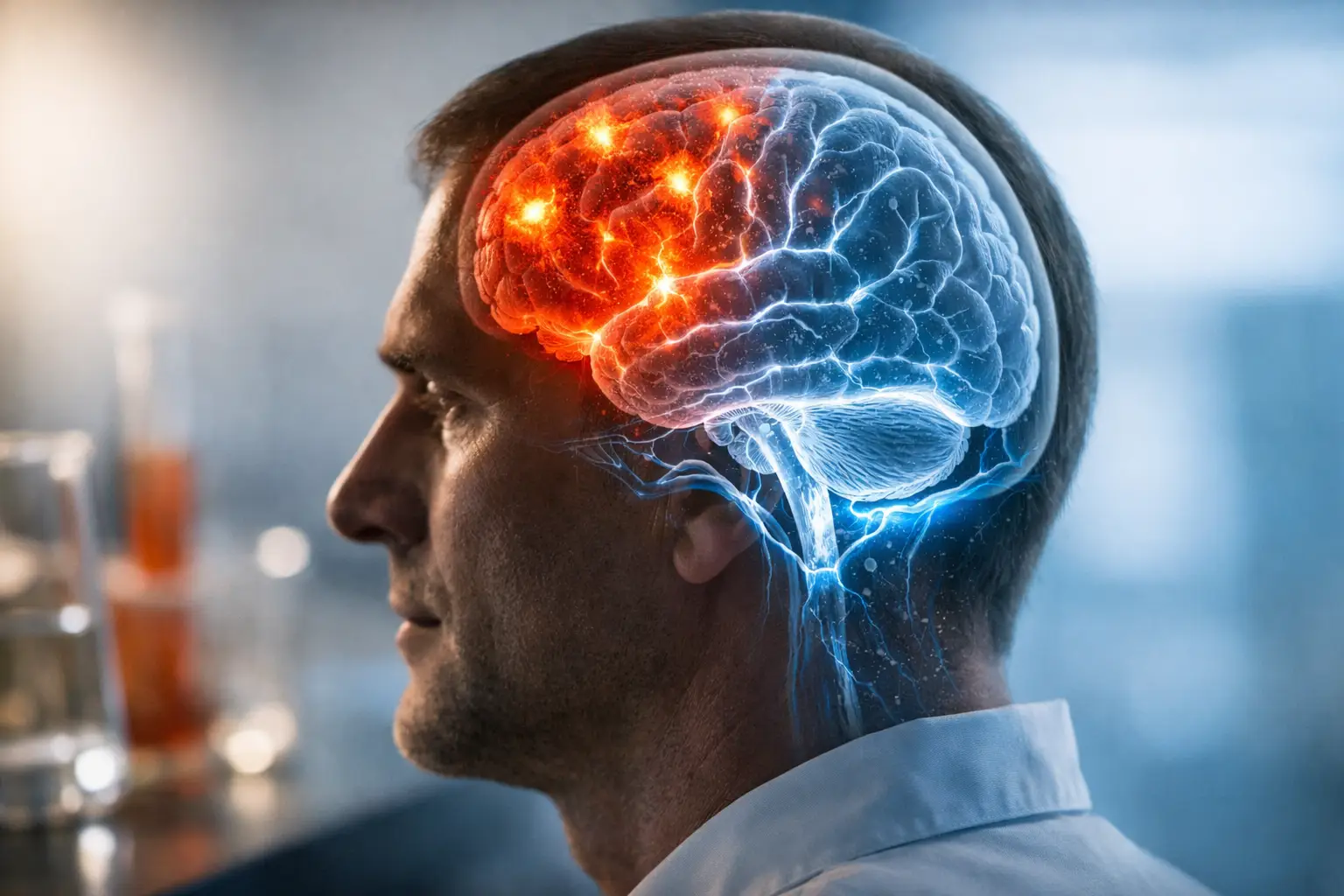
Does Inflammation Impair Glymphatic Flow?
A restless night after an infection, a concussion, or a stretch of chronic stress can leave you with more than fatigue. The foggy thinking, headache, slowed recall, and sense that your brain never fully reset may point to a deeper question: does inflammation impair glymphatic flow? The evidence from animal research and emerging human research strongly suggests it can.
The glymphatic system is the brain’s cleanup network. It helps move cerebrospinal fluid through brain tissue, where that fluid exchanges with interstitial fluid and carries away metabolic byproducts. This process is especially active during deep, restorative sleep. When inflammation disrupts sleep, blood vessels, glial cells, or fluid movement, the brain’s overnight maintenance cycle may lose efficiency.
Does inflammation impair glymphatic flow?
Yes, potentially in several connected ways. Inflammation is not one single event. It is an immune response that can be brief and helpful, as in recovery from an infection or injury, or persistent and damaging, as in chronic metabolic disease, autoimmune conditions, untreated sleep apnea, repeated head injury, or long-term poor sleep.
In the brain, inflammatory signaling can activate immune cells called microglia and alter astrocytes, the star-shaped support cells that help regulate the movement of water and fluid around blood vessels. Astrocytes contain water channels called aquaporin-4, or AQP4, which are thought to play an important role in glymphatic exchange. When these channels become disorganized or shift away from their usual location around blood vessels, fluid movement may become less effective.
Inflammation can also increase vascular permeability, promote tissue swelling, and change the normal rhythmic pulsing of blood vessels that helps drive fluid through the brain. Add fragmented sleep to the picture, and the conditions for effective clearance become even less favorable.
This does not mean every inflammatory episode permanently damages brain clearance. A short-lived cold, hard workout, or acute injury triggers immune activity for a reason. The concern is unresolved, repeated, or chronic inflammation – particularly when it repeatedly steals deep sleep and keeps the nervous system in a state of stress.
Why the glymphatic system is vulnerable to inflammation
The glymphatic system depends on timing and anatomy. During deep non-REM sleep, brain cells change their activity and the spaces between them may become more favorable for fluid exchange. Slow brain waves, breathing patterns, and cardiovascular pulsations all appear to contribute to this nighttime housekeeping.
Inflammation can interfere with each layer of that process.
First, inflammatory messengers such as cytokines can disturb sleep architecture. You may spend enough hours in bed yet get less consolidated deep sleep, wake more often, or experience less restorative sleep. Since glymphatic activity appears to be closely tied to sleep state, broken sleep can mean broken clearance.
Second, neuroinflammation may change the behavior of astrocytes and microglia. These cells are essential responders to injury and infection, but prolonged activation can reshape the local environment around neurons and blood vessels. That may affect AQP4 polarization, fluid transport, and the removal of proteins or metabolites from brain tissue.
Third, inflammation can travel with conditions that already challenge glymphatic flow. High blood pressure, diabetes, obesity, vascular disease, chronic pain, depression, alcohol overuse, and sleep-disordered breathing can all affect circulation, inflammation, sleep quality, or all three. In real life, the problem is rarely one isolated pathway.
What research can and cannot say
Research linking inflammation and glymphatic dysfunction is compelling, but it is still developing. Much of the clearest mechanistic evidence comes from animal models, where researchers can directly observe fluid movement and manipulate specific inflammatory pathways. Human glymphatic research is more difficult because the system cannot be measured with one simple office test.
Advanced imaging, sleep studies, cerebrospinal fluid analysis, and postmortem tissue studies are helping researchers map the connection. Findings across neurodegenerative disease, traumatic brain injury, stroke, infection, and aging point toward a shared pattern: inflammation, impaired sleep, vascular dysfunction, and reduced waste clearance often cluster together.
But association is not always proof of cause. Inflammation may impair glymphatic flow, while reduced clearance may also allow inflammatory signals and harmful proteins to linger. It can become a feedback loop rather than a straight line. That distinction matters because there is no proven way to “flush” the brain on demand, and no supplement should be presented as a replacement for treating infection, a sleep disorder, a concussion, or an inflammatory disease.
The conditions where this connection matters most
For people concerned about long-term cognitive resilience, this science is not abstract. It offers a useful lens for understanding why certain health challenges can leave the brain feeling depleted long after the original trigger seems to have passed.
After a concussion or traumatic brain injury, inflammatory signaling, altered blood flow, and sleep disruption may all occur at once. Headache, light sensitivity, dizziness, and cognitive fatigue can make sleep difficult precisely when recovery processes need it most. Persistent or worsening symptoms deserve medical assessment, especially after any blow to the head.
In sleep apnea, repeated drops in oxygen and frequent arousals can drive inflammation while breaking up the deep sleep associated with brain recovery. Treating apnea is not merely about reducing snoring. It may be a meaningful step toward protecting cardiovascular health, daytime cognition, and the conditions that support healthy glymphatic function.
Aging adds another layer. Sleep often becomes lighter and more fragmented with age, while vascular changes and low-grade inflammation become more common. This does not make cognitive decline inevitable. It does mean brain maintenance deserves the same serious attention people give to blood pressure, mobility, and heart health.
Reducing the obstacles to overnight brain clearance
The most powerful strategy is not chasing a single “detox” intervention. It is lowering the daily burdens that keep inflammation elevated and deep sleep unstable.
Start with sleep continuity. Keep a consistent wake time, give yourself enough time in bed, limit alcohol near bedtime, and address chronic snoring, gasping, insomnia, or frequent awakenings rather than accepting them as normal aging. Deep sleep cannot do its full restorative work if it is constantly interrupted.
Support vascular health as well. Regular movement, blood-pressure management, balanced blood sugar, and a dietary pattern rich in minimally processed foods can reduce several drivers of chronic inflammation at the same time. The goal is not perfection. It is creating more nights when the brain has the biological conditions to recover.
Stress regulation belongs in this conversation, too. Chronic stress can fragment sleep and keep inflammatory signaling elevated. A daily walk, breath practice, time outdoors, social connection, or a protected wind-down routine may sound basic, but basic inputs have outsized effects when repeated for months.
Natural brain-support products may fit into a broader plan, not replace one. Glymphatic.com’s My Brain Restore™ is positioned around glymphatic-system support through a rare plant seed prepared with Ultra Chill Milled™ technology. Consider any supplement with the same standards you would apply to diet or exercise: review the ingredients, discuss it with a qualified clinician if you take medications or have a medical condition, and keep expectations grounded in the available evidence.
When brain fog needs more than a wellness routine
Do not assume persistent cognitive symptoms are simply inflammation or poor clearance. New confusion, weakness, trouble speaking, severe sudden headache, fainting, vision changes, chest pain, or symptoms after a significant head injury require urgent medical care. Ongoing brain fog, worsening memory, depression, severe fatigue, or sleep problems also warrant a clinical conversation.
The glymphatic system has changed the way scientists think about brain maintenance. It has made one fact harder to ignore: sleep is not idle time, and inflammation is not confined to sore joints or a fever. Each night is an opportunity for the brain to repair, regulate, and clear the residue of another day. Protect the conditions that make that work possible.